


Mayors of Three Special Metropolitan Cities Request Budget Allocation to Ministry of Economy and Finance to Revise Basic Asset Standards by Ministry of Health and Welfare

[Suwon Ilbo=Reporter Jung Jun-sung] Mayors of special metropolitan cities have requested that the Ministry of Economy and Finance allocate budgets to raise the basic asset standards of four special metropolitan cities to the 'metropolitan city' benchmark.
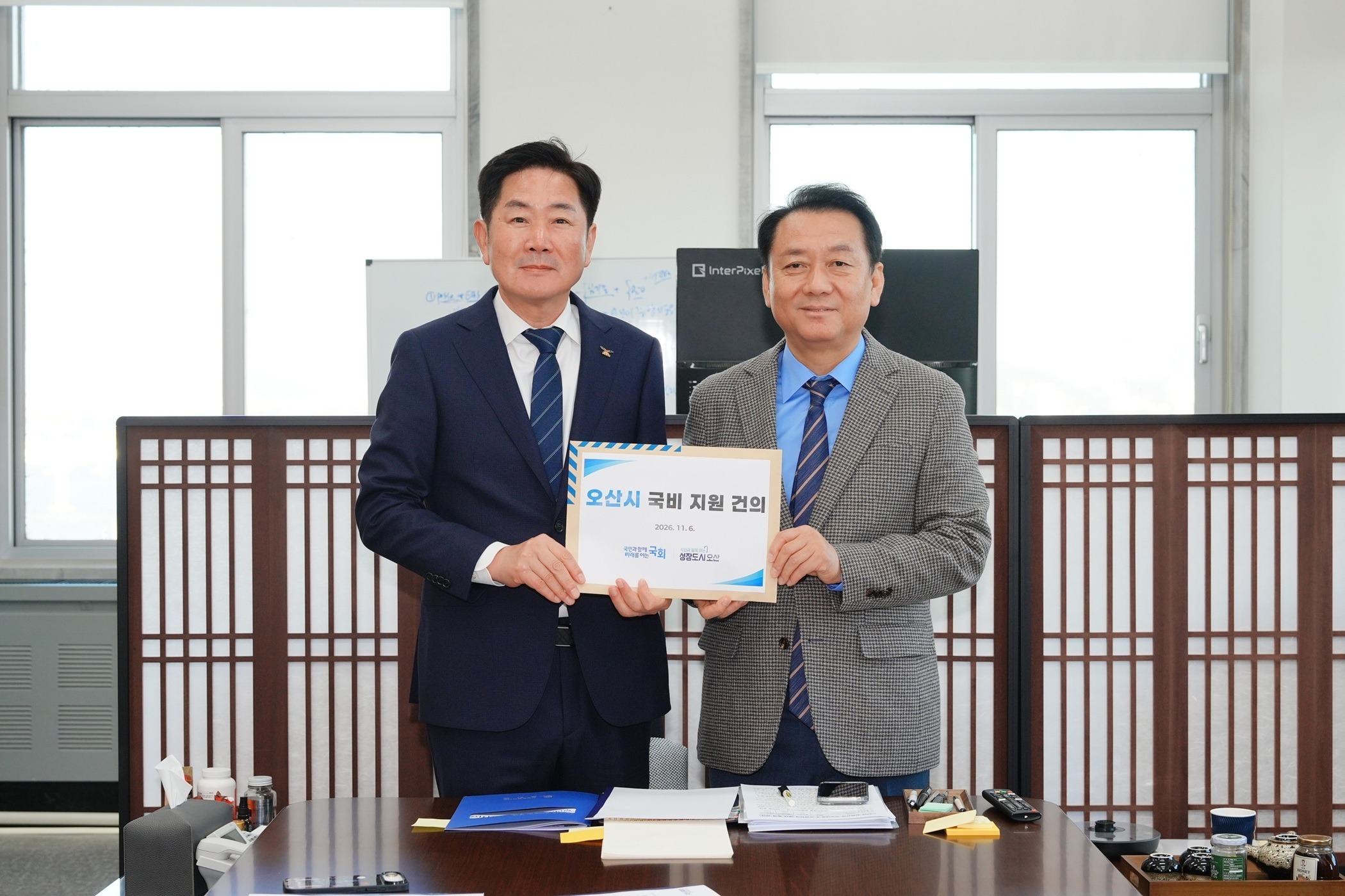
Suwon Mayor Yeom Tae-young, Yongin Mayor Baek Gun-gi, and Changwon Mayor Huh Sung-moo met with Ahn Do-geol, Deputy Minister of the Ministry of Economy and Finance, on the 12th at the National Balanced Development Committee conference room in the Government Seoul Office and proposed "allocating budgets for amending the Ministry of Health and Welfare's basic asset standards notice to raise the standard for determining social welfare benefits in special metropolitan cities to the 'metropolitan city range,'" and delivered a proposal document containing relevant details.
The mayors of the three cities requested "the Ministry of Health and Welfare to amend the basic asset standards notice and allocate related budgets so that implementation can begin from January 2022."
Cities with populations of over one million have socioeconomic scale and living standards similar to 'metropolitan cities' (Seoul, metropolitan cities), but when selecting welfare recipients, they are classified as 'small and medium cities' with lower basic asset standards than metropolitan cities.
Basic asset standards refer to the value of assets that are recognized as necessary for maintaining basic living and are excluded from income calculation.
Under the current system, when selecting recipients of basic livelihood security, the basic asset standards are deducted by city size: 69 million won for metropolitan cities, 42 million won for small and medium cities, and 35 million won for rural areas. Large cities with populations of over one million are also included in 'small and medium cities,' applying the same standards as basic local governments with populations of 50,000 to 100,000.
Due to unreasonable standards, citizens in cities with populations of over one million face disadvantages: even if they have the same asset value as metropolitan city residents, they receive smaller basic asset deductions, resulting in either being excluded from social welfare eligibility or receiving lower benefit amounts.
To resolve the reverse discrimination faced by citizens in cities with populations of over one million, the four special metropolitan city mayors have held multiple meetings with government officials including the Prime Minister, the Minister of Health and Welfare, the Chair of the Presidential Committee on Balanced National Development, and Blue House officials, actively proposing amendments to standards for improving the unreasonable criteria for selecting welfare recipients.
Since July 14, they have been continuously urging amendments through joint statements in front of the Ministry of Health and Welfare office, relay protests by individual mayors, and rallies.
In October 2011, the Presidential Committee on Civil Service Ethics recommended refining regional classifications, noting that uniform basic asset standards could create fairness issues. Additionally, the Presidential Committee on Balanced National Development on July 23 confirmed and passed this as a 'matter requiring institutional improvement,' stating that the standards for social welfare benefits do not align with the reality of cities with populations of over one million and require institutional reforms.
Loading comments…