


Gyeonggi Province Discusses 20 Regulatory Reform Tasks with Presidential Office of Coordination
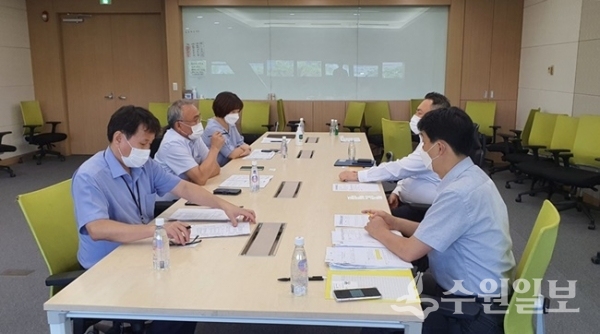
[Suwon Ilbo=Reporter Park No-hun] Gyeonggi Province announced on the 27th that it held a 'Regulatory Reform Field Meeting' jointly with the Presidential Office of Coordination in Sejong City on the 26th.
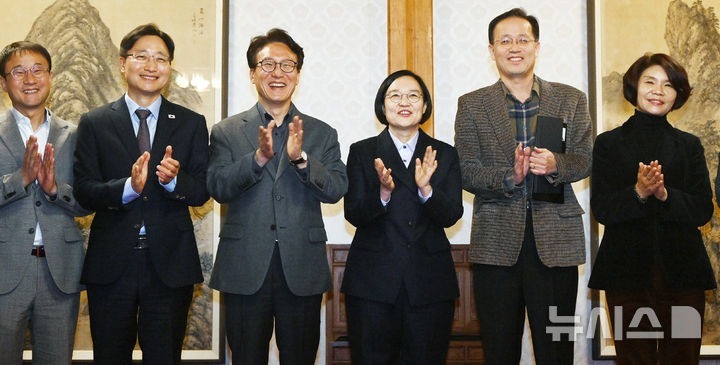
At the meeting, six participants including Im Taek-jin, Director of the Regulatory Reform Division at the Presidential Office of Coordination, and the province's regulatory reform official, discussed 20 tasks raised from residents and businesses.
The meeting covered 15 tasks in the land and urban planning sector, including ▲institutional improvements for installing living SOC facilities in new cities ▲expanding the scope of development impact fee exemptions for USFK return areas ▲institutional improvements for hydrogen charging station installation in agricultural and forestry areas ▲relaxing area restrictions to activate small-scale housing redevelopment projects.
Five tasks in the health and welfare sector were also discussed, including ▲relaxing entrusted care standards for community care centers ▲relaxing installation standards for child abuse victim shelters ▲improving procedures for reflecting nearby residents' opinions when creating natural burial grounds.
Regarding development impact fees for USFK return areas, the 'Special Act on Support for Areas Around USFK Return Areas' defines the surrounding areas as the eup, myeon, and dong where the return area is located and adjacent eup, myeon, and dong, but the 'Act on Recovery of Development Profits' limits the development impact fee exemption area to only the eup, myeon, and dong where the return area is located, creating difficulties for local governments in tax assessment.
Accordingly, Gyeonggi Province proposed to expand the scope to include adjacent eup, myeon, and dong to provide fair tax exemption benefits to areas that have sacrificed for national defense.
This is estimated to result in annual development impact fee exemptions of over 20 billion won for new cities and other projects.
Regarding child abuse victim shelters, the current installation standards require a residential dormitory with a dedicated floor area of at least 100 square meters and at least 4 rooms. However, in the Seoul metropolitan area, homes meeting these standards are priced at a minimum of 600 million won, making installation difficult.
The province proposed relaxing the dedicated floor area requirement to 100 square meters of supplied floor area and allowing combined use of staff dormitories and psychological therapy rooms, enabling installation with 3 or more rooms.
Tasks discussed at the regulatory reform field meeting will be submitted to the regulatory grievance hotline after additional discovery of on-site conditions, damage cases, and similar improvement cases, and logical reinforcement through revision and supplementation of legislative amendments to increase central government acceptance.
To enhance residents' perception of regulatory reform this year, Gyeonggi Province plans to communicate directly with residents and businesses through city and county tour meetings and one-stop field consulting, and will sequentially propose regulatory rationalization tasks in consideration of appropriateness and ripple effects.
Heo Soon, Gyeonggi Province's regulatory reform official, said, "Through this meeting, we will strengthen the cooperation system between the government and local governments necessary for regulatory rationalization, and will continue to make efforts to reasonably improve unreasonable regulations at the Gyeonggi Province level."
Loading comments…