


Gyeonggi Province Officially Proposes to Establish Lee Kun-hee Collection Museum in Northern Gyeonggi
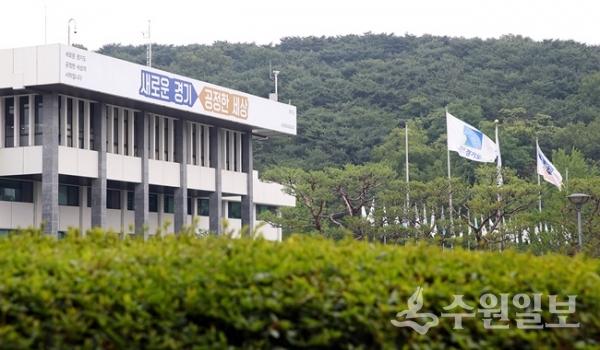
[Suwon Ilbo=Park No-hun] Gyeonggi Province has formally proposed to the government that a dedicated museum for the Lee Kun-hee Collection, featuring cultural properties and artworks donated by the bereaved family of the late Samsung Chairman Lee Kun-hee, be established in Northern Gyeonggi.
The proposal calls for creating a national cultural facility on U.S. military-returned sites to benefit residents of Northern Gyeonggi, who have faced difficulties from overlapping regulations.
Gyeonggi Province announced on the 14th that it has submitted a ‘proposal for the Lee Kun-hee Collection Museum project’ to the Ministry of Culture, Sports and Tourism.
Previously, the bereaved family of Chairman Lee Kun-hee announced plans to donate approximately 23,000 items, including globally recognized Western paintings owned by the late chairman and modern art works by renowned Korean artists.
In response, President Moon Jae-in instructed the government to prepare a dedicated exhibition space where the donated artworks can be displayed and made available to the public.
In the proposal, the province emphasized ‘special compensation for special sacrifice.’
The intent is to stress the need for government support for Northern Gyeonggi, which has been marginalized and faced reverse discrimination in the national territorial balance development policy due to its status as part of the capital region.
The province explained that the entire 4,266 ㎢ area of Northern Gyeonggi is subject to regulation zones under the Capital Region Readjustment Planning Act, with 42.8% restricted as special Paldang measures and military facility protection zones, and 11.7% designated as green belt areas, suffering from overlapping regulations.
Unlike Seoul (one facility) and Incheon (under construction) in the same capital region, Gyeonggi Province has no state-run cultural facilities.
As a specific implementation plan, the province pointed to ‘government-led development of U.S. military-returned sites,’ which was both a Moon Jae-in administration pledge and a state agenda.
According to the realignment plan for USFK, Northern Gyeonggi has 20 U.S. military-returned sites (with development utilization area of 12.62 million ㎡ out of 48.33 million ㎡ total return area) located in three cities: Uijeongbu, Paju, and Dongducheon.
“Residents in areas surrounding U.S. military bases are a region that has endured regional development restrictions, noise pollution, and deteriorated urban image for over half a century for national security, requiring special compensation for their special sacrifice,” said Kim Jong-seok, Director of the Culture, Sports and Tourism Bureau of Gyeonggi Province. “If the Lee Kun-hee Collection Museum is established at U.S. military-provided areas under government leadership, it can be developed more swiftly and efficiently than other cities and provinces securing sites with private capital.”
The province plans to consult with the relevant cities and counties on plan modifications if necessary for attracting the ‘Lee Kun-hee Collection Museum,’ taking into account the existing ‘comprehensive development plan for areas around USFK-provided zones’ currently being promoted by these cities and counties.
Loading comments…