


Gyeonggi Province Materializes "Vacant House Improvement" Project to Transform Neglected Properties
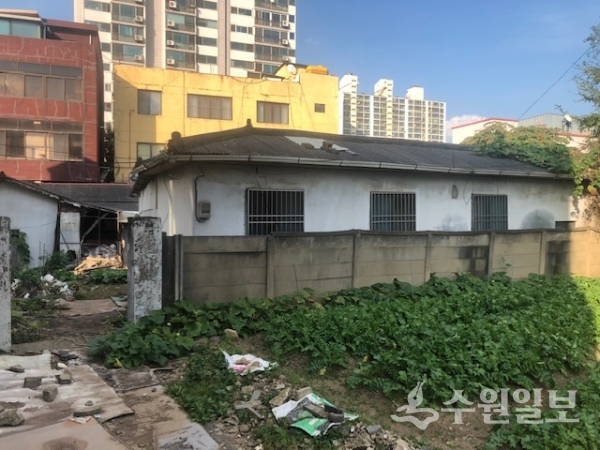
[Suwon Ilbo=Reporter Park No-hun] Gyeonggi Province will formally launch the "Vacant House Improvement" project this year to address the vacant house problem that has become an eyesore in local communities and is accelerating urban decay.
According to Gyeonggi Province on the 17th, the province plans to formally pursue the "Vacant House Improvement Support Project" and "Gyeonggi-type Vacant House Utilization Pilot Project" this year to tackle vacant house improvement in urban areas.
The province plans to complete a comprehensive actual condition survey of all vacant houses by this month and establish a vacant house improvement plan based on the findings. Ten cities including Goyang, Guri, Bucheon, and Yongin have already completed their plans, and the remaining cities aim to complete their planning by year-end.
The 2021 Vacant House Improvement Support Project will invest 1.325 billion won (30% provincial budget, 70% city budget) to support demolition, repair, and safety measures for 86 vacant houses in four cities—Suwon, Yongin, Goyang, and Icheon—where planning has been completed, encouraging their conversion to rental housing or public use.
For vacant house demolition, support of up to 10 million won is provided, and when demolition is followed by public use, support is expanded to up to 20 million won. For repairs, support of up to 10 million won is provided (up to 30 million won for public use), and safety measure costs are supported up to 6 million won. The province plans to expand the project annually.
The Gyeonggi-type Vacant House Utilization Pilot Project, with total project cost of 6.5 billion won, is an initiative through which Gyeonggi Housing and Urban Development Corporation will purchase one vacant house each in the southern and northern regions to supply rental housing and public community facilities, thereby revitalizing local areas. Currently accepting applications, residents interested in participating can do so by the 22nd through consultation with the local government where the vacant house is located.
Meanwhile, as of the end of last year, there were a total of 5,132 vacant houses in the province, with single-family houses accounting for 3,529 units or 69% of the total. The remainder consists of apartments (231 units), multi-unit housing (210 units), and other shared residences.
Since 2016, the province has been supporting cities and counties with funding for vacant house surveys and vacant house improvement plan development, and has provided various support including distributing vacant house improvement plan guidelines.
A province official stated, "Gyeonggi Province will continue to develop measures to prevent the spread of vacant houses and address the problem of neglected vacant properties," and added, "We appreciate the interest and participation of residents and vacant house owners."
Loading comments…