


Gyeonggi Province Implements Guidelines for Improving Development Activities and Planned Management in Mountainous Areas
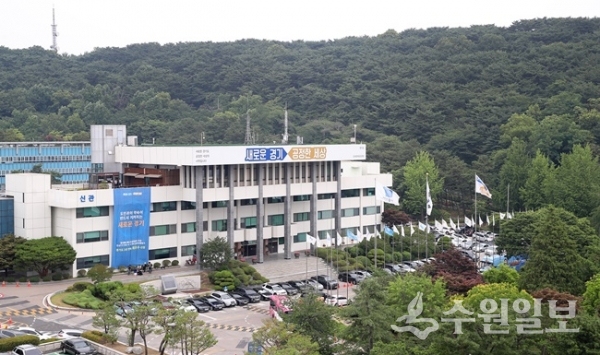
[Suwon Ilbo=Reporter Park No-hun] Gyeonggi Province has taken a first step toward clean forest conservation measures, including establishing provincial development and management guidelines that can be reflected in amendments to city and county ordinances to improve indiscriminate mountain development activities.
Gyeonggi Province announced on the 2nd that it had issued to cities and counties the "Gyeonggi Province Guidelines for Improving Development Activities and Planned Management in Mountainous Areas" for disaster prevention and forest environment conservation.
The guidelines contain elevation and slope standards, standards for setting cut and fill slopes and retaining walls, standards for access road width and longitudinal slope, among other matters.
Looking at the guidelines, the province first proposed using sea-level elevation instead of the existing reference ground elevation (the height of the nearest road from the development site) as the elevation standard among development permission criteria.
Currently, some cities and counties in Gyeonggi Province allow development permission at elevations where the elevation standard is 50 meters or less below the reference ground elevation.
This way, the elevation continues to increase, making development possible even at mountain peaks.
To prevent mountainous areas from being damaged in this manner, the province proposed using sea-level elevation as the elevation standard to set a certain height standard according to local conditions, with development prohibited above that level.
Regarding slope, reflecting topographic characteristics and the degree of legal restrictions, the province proposed that cities and counties with higher forest coverage rates than the national average or relatively strict restrictions could flexibly operate slope standards in a way that allows relaxation of slope criteria.
This guideline follows the intent of Gyeonggi Province Governor Lee Jae-myung, who emphasized that "careless destruction of forests is a sin against future generations who will live on, and we must preserve forests and pass them down well to future generations."
On the 25th, Governor Lee visited a mountainous area development site in Shinheong-ri, Opo-eup, Gwangju, stating, "Landowners, construction companies, design and civil engineering firms inevitably need to generate profits through development and raise land prices, so cities and counties will face tremendous development pressure. If the province establishes standards, it will be easier for cities and counties to resist the development pressure," and instructed the establishment of standards.
The guidelines must be reflected in the relevant cities and counties' urban and rural planning ordinances to have legal effect.
A provincial official stated, "Active cooperation and participation from cities and counties is necessary to improve mountain development activities and preserve clean forests. We hope that the content of these guidelines will be used when cities and counties amend their urban and rural planning ordinances to improve development permission criteria."



Loading comments…