


Gyeonggi Province Establishes Public-Private Partnership Task Force to Accelerate Early Return of U.S. Military-Provided Land

[Suwon Ilbo=Reporter Park No-hun] A policy collaboration organization has been established centered on Gyeonggi Province to promote early return of U.S. military-provided areas and state-led development, while driving improvements in related systems.
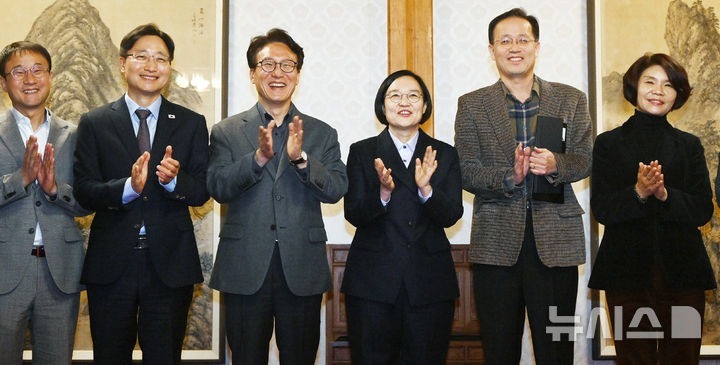
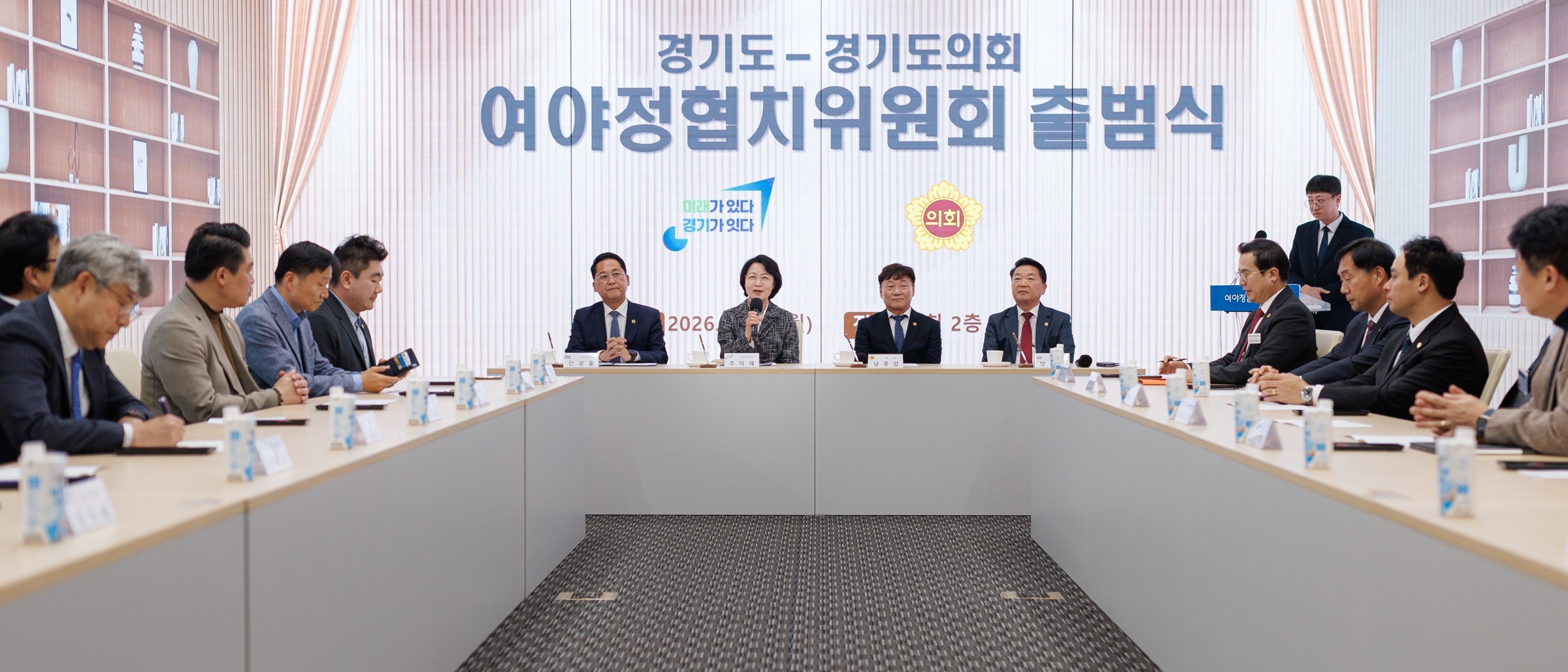
Gyeonggi Province held a commemorative plaque unveiling ceremony and first meeting of the 'U.S. Military-Provided Area Early Return and State-Led Development Promotion Task Force' on the afternoon of the 8th at the Northern Headquarters of Gyeonggi Provincial Government. The event was attended by approximately 20 participants including Lee Hwa-young, Vice Governor for Peace, as well as officials from the province and municipalities, and private sector experts.
This task force aims to ensure that effective alternatives reflecting regional circumstances are reflected by bringing together public and private sector experts in connection with the Ministry of Interior and Safety's launch of 'policy research on early activation measures for returned-provided areas' beginning in November of last year.
The task force is co-chaired by the Vice Governor for Administration and the Vice Governor for Peace, and includes members such as the Director of the Balanced Development Planning Office and the Director of the Environmental Bureau, deputy heads of six municipalities related to returned-provided areas (Paju, Uijeongbu, Yangju, Pocheon, Dongducheon, and Yeoncheon), research fellows from the Gyeonggi Research Institute, the Director of the Balanced Development Division at Gyeonggi Urban Development Corporation, and external experts including university professors.
Beginning with this first meeting, the task force plans to establish an organic cooperation system by holding quarterly regular meetings and convening emergency meetings when issues arise, while developing and implementing practical problem-solving measures.
Specifically, it will analyze problems with undeveloped U.S. military-returned provided land and explore corresponding policy directions, with particular focus on discussions on measures to revitalize development of surrounding areas such as long-term leasing, installment payment of land fees, and public development.
Additionally, the task force plans to collect opinions proposed by local governments and experts at meetings and actively present them to the government, while working closely with relevant ministries and agencies and the National Assembly (regional members of the National Assembly) to bring about legal amendments and system improvements for activating private sector investment and expanding state funding support.
Beyond this, the task force will also make efforts to identify environmental pollution conditions through monitoring of areas surrounding U.S. military bases and develop countermeasures related to preventing expansion of contaminated areas.
Vice Governor Lee Hwa-young stated, "I hope that this task force will serve as an opportunity to create a model through which U.S. military-provided land issues can be substantially resolved this year," adding "Particularly, when a new National Assembly is formed, I anticipate that the Unification Economic Special Zone Act could be enacted. In line with this, I believe we need to explore various measures such as developing provided land near border areas into peaceful industrial complexes. Let us gather our efforts so that good solutions can emerge."
Meanwhile, at the first meeting held on the same day, discussions included the establishment plan for a comprehensive support plan for areas affected by the stationing of U.S. Forces in Korea, activation plans for U.S. military-provided areas, and outstanding issues by municipality.
Loading comments…