


Urgent Need for Climate Change Response Organization
Experts have indicated that establishing comprehensive response strategies at the local government level and creating dedicated institutions are urgently needed for effective adaptation to international climate and environmental changes, including ozone layer depletion and global warming, which are becoming increasingly severe.
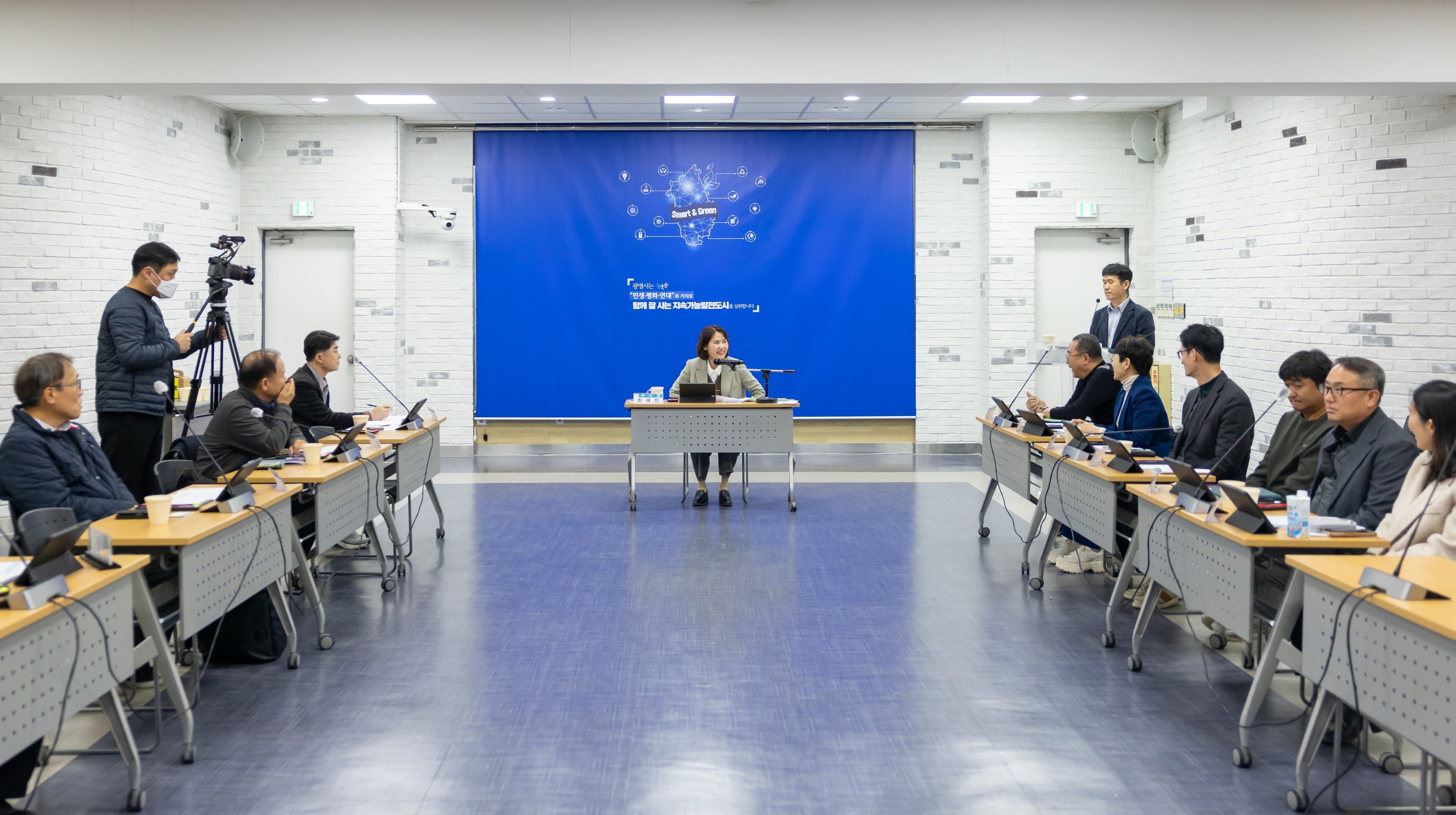
Panelists at a forum titled "Exploring the Role and Policy Direction of Local Governments in Response to Climate Change," held on the 28th of last month in the Suwon City Hall conference room and organized by the Suwon Environmental Movement Union, agreed that "climate and environmental change begins at each local government."
They also stressed that to develop effective countermeasures for climate change, local governments must integrate their fragmented administrative divisions into unified, comprehensive, and planned strategies through the establishment of a dedicated response organization.
Professor Kim Jeong-in from Chung-Ang University, who presented the keynote, explained climate change response trends and measures in foreign cities such as Barcelona, Spain, which enacted an ordinance requiring over 60 percent solar energy use for heating and hot water in new buildings; Mildura, Australia, which generates electricity through solar-powered artificial wind; and Toronto, which implemented public participation initiatives. He presented roles and policy directions for Suwon and local governments.
Shim Gyun-seop, head of the Atmospheric Environment Division at Suwon City Hall, stated, "abnormal weather phenomena such as increased greenhouse gas emissions, rising average temperatures, and rising sea levels are occurring globally," and added, "South Korea's greenhouse gas emissions have been rising an average of 5.1 percent from 1990 to 2002, so we must participate in international efforts to stabilize atmospheric greenhouse gas concentrations."
Kim Yeon-ji, director of the Environmental Movement Union, said, "the consequences of climate change, a global issue, ultimately result in local matters such as changes to regional agriculture and fisheries, forest environments, and urban heat island phenomena," and stated, "since statistical data collection and implementation methods for greenhouse gas reduction are based on local government capabilities, efforts from local governments are necessary."
Meanwhile, approximately 30 people attended the forum, including Professor Jung In-hwan, Hong Woong, an official from Gyeonggi Province's Air Quality Management Division, and Park Eun-ho, general secretary of Gunpo YMCA.


Loading comments…