


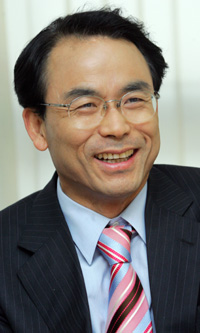
Born deep in the remote mountains of Jirisan, in a village where only a handful of small plots of land existed despite combining the fields of the entire community, Former Minister Jin Dae-je experienced a childhood marked by scarcity. Not only his relatives but also his family members had no choice but to scatter for the sake of survival.
Though he moved to Daegu at age four, poverty remained inescapable. His mother worked day and night doing laundry and cleaning markets at the town square, while young Jin Dae-je was raised sitting on his older sister's back. His sisters still look at him with pity today, saying that because he went hungry during his elementary school years, he remained small in stature.
During his school days, Former Minister Jin would quench his hunger with tap water when hungry, and his sole wish was to own a single textbook. He attended school in mended socks and worn-out shoes with holes, embarrassed to bring his barley rice lunch to school. Yet he was a dreamer—observing nature and molding clay into pottery, gathering discarded motors to build boats and airplanes. He displayed unwavering determination, spending sleepless nights under the glow of oil lamps trying to craft anything possible with salvaged motors.
When the family desperately needed someone to contribute to household income, responding to his father's words to earn his own living, Jin Dae-je enrolled in a vocational high school. However, a single word from a neighbor girl who lived next door changed the direction of his life. She asked him, "Why don't you go to Seoul where I have an older sister and study?" and even provided him with a bundle of textbooks from Gyeonggi High School and spending money.
This sincere help from a neighbor became the turning point that transformed Jin Dae-je's life.
After entering Gyeonggi High School, Jin Dae-je and his father moved into a small rented room in Ichon-dong, western Seoul. His father worked as a day laborer while his mother occasionally sent some spending money, but funds often ran short and he frequently went hungry. One day, he even came home to find his entire residence demolished for apartment construction.
Through this experience, Jin Dae-je made a resolute promise never to pass down poverty to his children. Employing what he called "roly-poly study method"—falling asleep where he studied and waking to study again—he developed an extraordinary determination and strong competitive spirit that would never yield to hardship and adversity.
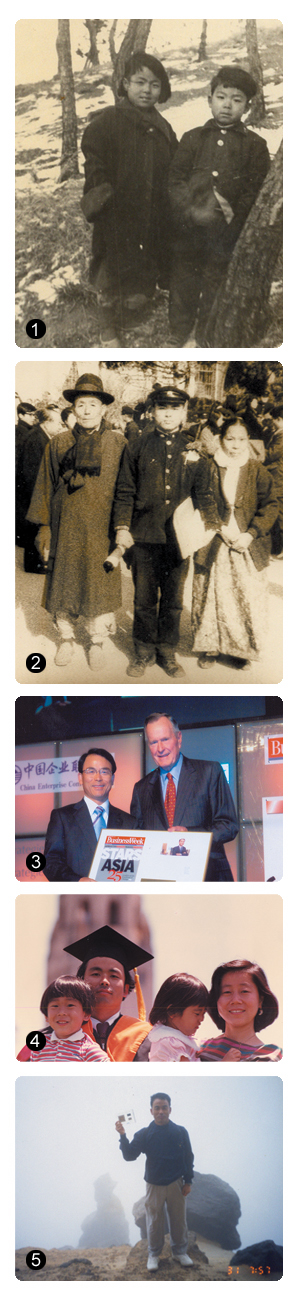
After developing a passion for semiconductors while studying electronic engineering at Seoul National University and completing his master's degree, Jin Dae-je became the very first government-sponsored overseas scholar in 1976. However, his path ahead as a student in an unfamiliar country was far from smooth.
To pass his doctoral qualification exam, he had to start from scratch studying computers, a field completely foreign to him, and since he could not continue his studies without a scholarship, he also had to battle financial hardship.
Ultimately, at the University of Massachusetts and Stanford University, Jin Dae-je earned his doctoral degree through his physical interpretation of the "bird beak growth phenomenon," then considered a difficult problem, and his work became known as "Jin Dae-je Theory," appearing in American semiconductor reference materials.
After completing his studies, Jin Dae-je was a leading researcher at IBM, the world's top company. Yet he abandoned the path to wealth and fame, choosing his homeland with the resolve to "devour Japan." In 1985, when semiconductors were still a barren field in Korea, he joined Samsung and developed 16M DRAM, bringing Samsung to the number one position globally in semiconductor memory business.
He then took the non-memory semiconductor division, which ranked 14th among Samsung's 15 business units, to fourth place within the group in just three years. Moving to become president of Samsung Electronics' Digital Media Division in 2000, he declared an all-out competition with Sony in digital televisions and crushed Sony's supposedly impregnable fortress, creating the legend of a world-class enterprise.
▲ Worrying About What the Nation Will Eat in Ten Years
Receiving a call to create jobs for the nation's livelihood ten years ahead, Former Minister Jin boldly abandoned his personal wealth—he was set to receive hundreds of billions of won in stock options after just one more week of work—and chose the path of government bureaucrat.
As the top executive of the Ministry of Information and Communication, which introduced corporate concepts into government organizations, Former Minister Jin boldly applied business systems to government structure.
Most notably, he made the Ministry of Information and Communication the government's top organization within three years of taking office—a first since the nation's founding—including budget cuts from his own department, while simultaneously ranking first in integrity for two consecutive years.
The vanguard who created IT Korea, a global leader in information and communication that astonished the world. Former Minister Jin Dae-je earned yet another title: Korea's longest-serving minister in the Roh Moo-hyun administration.
During his tenure at the Ministry, Former Minister Jin repeatedly pondered how to secure a livelihood for future Korea, a nation with few natural resources.
He concluded that IT and science and technology were the only forces that could revitalize Korea's economy, which had been stalled at the $10,000 per capita income level for eight years.
His "Korea New Growth Engine IT839 Strategy" and WiBro (Wireless Broadband), portable high-speed internet, were born from these reflections.
Through Korea's first development of DMB, enabling people to watch terrestrial broadcasts on their cell phones while sitting in subway cars and making wireless internet possible inside moving vehicles, Former Minister Jin Dae-je's dream continues unabated, still directed toward future Korea's path to prosperity.
| < Jin Dae-je's Life Path >  ▲ Master's Degree in Electronic Engineering, Seoul National University ▲ Master's Degree in Electronic Engineering, University of Massachusetts and Stanford University ▲ Researcher, IBM Watson Research Laboratory, United States ▲ Senior Researcher, Samsung Electronics U.S. Subsidiary ▲ Executive Vice President, System LSI Business Division, Samsung Electronics ▲ Director, Samsung Electronics Central Research Institute ▲ President and Representative Director, Samsung Electronics Digital Media Division ▲ Advisor, National Science and Technology Council ▲ Minister of Information and Communication |

Loading comments…