


Suwon Constructs Intelligent Transportation System
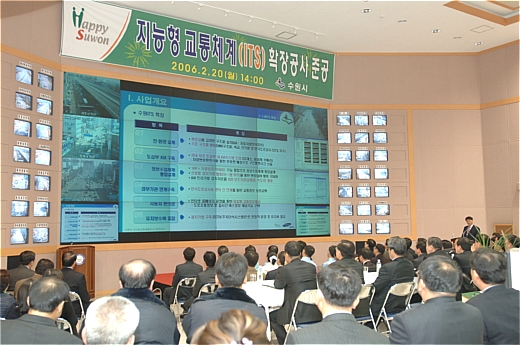 | ||
| ▲ On the 20th, a completion ceremony was held at the Suwon Traffic Information Center for Phase 2 of the Intelligent Transportation System (ITS) expansion project. | ||
On the 20th, the city held a completion ceremony for Phase 2 of the Intelligent Transportation System (ITS) expansion project at the Suwon Traffic Information Center, located within the grounds of the Central Police Station.
The city explained that since 2002, it has invested a total of 21 billion won in Phase 2 construction and installed a traffic signal control system that automatically adjusts signal timing based on traffic conditions. The system analyzes data such as traffic volume and vehicle speeds at 190 intersections on roads with four or more lanes in both directions throughout Suwon.
Additionally, the city installed 1,209 traffic detection devices to collect traffic volume and vehicle speed data, an automatic vehicle identification system, and 27 CCTV cameras at various locations on roads to respond quickly to traffic accidents. The city also installed variable message signs at 12 locations throughout the city to provide drivers with real-time traffic information.
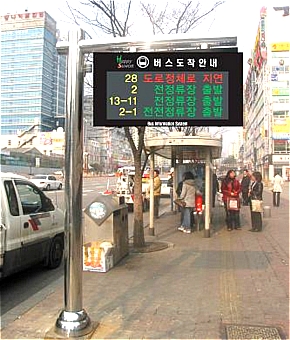 | ||
| ▲ A bus stop information display using GPS that provides bus passengers and drivers with bus arrival times and traffic information. | ||
Additionally, since August of last year, the city has jointly constructed a regional bus information system (BIS) with the Ministry of Construction and Transportation for 304 inter and intra-city buses operating between the Jiji Bridge and Changryong Gate sections, serving 23 bus stops on a pilot basis. The system provides public transportation services for citizens traveling between Suwon and Sadang.
Meanwhile, the city completed Phase 1 of the Intelligent Transportation System construction between 1997 and 2001, and plans to complete Phase 3 construction by July of next year with a total investment of 10.7 billion won.
A city official stated, "Once the Intelligent Transportation System is fully completed, traffic flow capacity in the Suwon area is expected to improve by over 20 percent, and logistics costs are projected to be reduced by over 30 billion won annually."


Loading comments…