


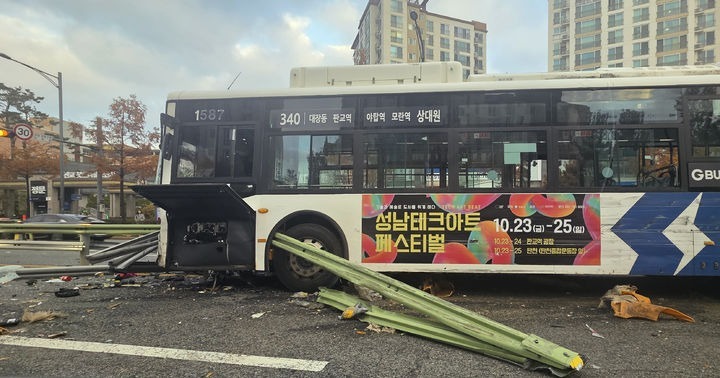
Gyeonggi Province announced on the 18th that it will unify the brand of Gyeonggi buses and actively introduce low-floor buses to improve the image of public transportation and enhance mobility convenience for the elderly and people with disabilities.
The province plans to first unify the external brands of buses, of which approximately 40 varieties are currently scattered across different cities, counties, and companies, with plans to select a design by next month.
The province has selected 4 design options across 17 types for Gyeonggi buses based on categories and functions, including city buses, intercity buses, and community buses. A final selection will be made after public hearings and opinion collection procedures.
Once the selection process is completed, the province will begin rebranding work in March, spending 1.8 billion won to apply the unified brand design to approximately 1,700 buses of various types.
In addition, the province plans to introduce 77 additional low-floor buses to secure mobility rights for people with disabilities and the elderly.
Low-floor buses have a chassis floor height of 34 centimeters, lower than standard buses (45 centimeters), and the chassis floor can be raised or lowered by 10 centimeters depending on bus stop conditions, providing convenient boarding for passengers.
Furthermore, they use natural gas (CNG) instead of diesel, resulting in minimal emissions.
To reduce the burden on operators of purchasing low-floor buses, which cost 180 million won per unit, the province plans to provide 122.5 million won per bus in subsidies.
With the addition of low-floor buses, the total number of low-floor buses in the province will increase to 116 units.

Loading comments…