


What Are the Administrative Systems and Policies Changing in Gyeonggi Province in the Second Half of 2018?
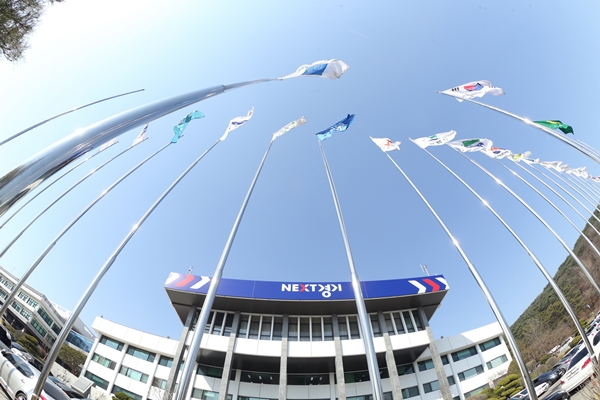
The restriction on old diesel vehicle operation, which was previously implemented only in Seoul, will be expanded from July to old diesel vehicles registered in 17 cities within Gyeonggi Province, including Suwon and Goyang, requiring attention from owners of such vehicles. The authority to approve urban regeneration activation plans will be delegated from the provincial governor to mayors in major cities with populations exceeding 500,000, which is expected to accelerate the pace of urban regeneration projects. The following introduces major administrative systems and policies changing in Gyeonggi Province starting in July.<Editor's Note>
※ Policies applicable only to Gyeonggi Province are marked with (Gyeonggi) next to the title
▲ Urban Regeneration Approval Authority Delegated to Mayors of Major Cities (Gyeonggi)
Starting in July, the authority to approve urban regeneration activation plans will be delegated from the provincial governor to mayors in major cities with populations of 500,000 or more. By delegating the approval authority, mayors can exercise autonomy and make prompt decisions by incorporating local assets, history, culture, local characteristics, and resident opinions, thus accelerating the pace of urban regeneration projects. Gyeonggi Province plans to strengthen administrative and financial support for urban regeneration projects pursued by cities.
▲ Old Diesel Vehicle Operation Restriction (Gyeonggi)
The restriction on old diesel vehicle operation, which was implemented only in Seoul, will be expanded starting July 1 to old diesel vehicles registered in 17 cities within Gyeonggi Province, including Suwon, Goyang, Seongnam, and Bucheon. The regulation targets vehicles weighing 2.5 tons or more that operate without emission reduction devices installed or have failed the final comprehensive vehicle inspection, with violators subject to fines not exceeding 2 million won.
▲ Gyeonggi Province Regional Development Bond Reduction and Exemption Extended Through End of 2018 (Gyeonggi)
The Gyeonggi Province regional development bond reduction and exemption program will be extended through the end of the year, allowing those purchasing vehicles with engine displacement of 2,000cc or less to skip purchasing regional development bonds. However, non-commercial passenger vehicles with acquisition values of 50 million won or more are excluded from the reduction and exemption benefits regardless of engine displacement. Additionally, national merit recipients temporarily holding two vehicles for prosthetic vehicle replacement purposes will be exempt from bond purchase obligations, with one vehicle counted for up to 60 days.
▲ Gyeonggi Province Construction Payment Confirmation System Operation (Gyeonggi)
Construction companies undertaking projects commissioned by Gyeonggi Province must use the Gyeonggi Province payment confirmation system starting in the second half of the year. This system separately processes payments to prime contractors, subcontractors, workers, and equipment and material suppliers, providing real-time monitoring of timely construction payment status. It prevents payment withdrawals beyond each party's rightful share, protecting subcontracting companies.
▲ Expansion of Children's Preventive Vaccination Program (National)
Starting September 11, the target group for free influenza vaccination will be expanded from existing infants and toddlers aged 6 months to under 59 months to all children aged 12 and under. Free vaccinations are available at health centers and contracted private medical institutions.
▲ Provision of Feminine Hygiene Products for Female Adolescents (National)
Starting in July, the target for feminine hygiene product provision will change from those with household income at 40% of the median to 50% or less, and female adolescents aged 11-18 who are eligible for single-parent family support. In the second half of the year, trial distribution will be provided through e-vouchers via the National Happy Card, and from next year, distribution will be provided entirely in voucher form. Applications can be submitted at local community centers.
Loading comments…