


"Regions Must Thrive and Seoul Must Strengthen Too"
'Opening Dawn Lecture' is a corner that relays on-site the breakfast lectures of the Korea Human Development Institute (KHDI), which carries the slogan "Good people make a good world." For the past 30 years, KHDI has held breakfast lectures without missing a single session every Thursday at 7 a.m., recording 1,399 sessions (as of this week), establishing the record for the most sessions in Korea and earning recognition as the most authoritative lecture series. We hope that this article, summarizing the lecture delivered on April 28 at the Emerald Room on the 2nd floor of the Lotte Hotel by Lee Dal-gon, Dean of Seoul National University Graduate School of Public Administration, on the theme of 'Administrative Complex City and Regional Balanced Development,' will contribute in some small way to our local residents' cultural enrichment. (Editor's Note)
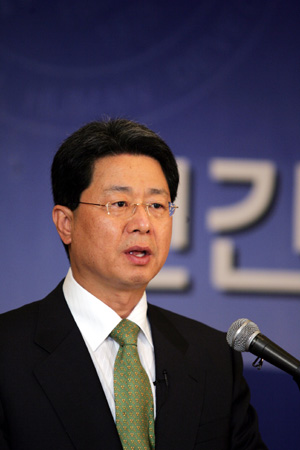 | ||
| ▲ On the 28th, a breakfast lecture hosted by the Human Development Institute was held at the Lotte Hotel in Sogong-dong. Dean Lee Dal-gon of Seoul National University Graduate School of Public Administration delivered a lecture on the theme of <Administrative Complex City and Regional Balanced Development>. /Yeouido Communications, Reporter Kim Jin-seok | ||
Lee Dal-gon, Dean of Seoul National University Graduate School of Public Administration, first expressed concerns about the 'Administrative Complex City' construction policy being pursued with the consent of the government and ruling and opposition parties. So what prompted this dean to take a critical stance on follow-up measures conducted in political circles following the constitutional court's decision against the administrative capital?
"Approximately 20 megapolises with populations exceeding 10 million exist worldwide, and among them, 12 cities are located in Asia. Tokyo's population has already exceeded 33 million, and China's Shanghai, built on flat terrain, is also expanding at a very rapid pace. As part of the Beseto (Beijing-Seoul-Tokyo) line, Seoul faces the destiny of competing and cooperating with the other two cities, which is why Seoul's international competitiveness is important. In a situation where international organizations' Asian branches mainly choose Hong Kong or Singapore as office spaces, further weakening Seoul's urban functions would be a serious problem. I believe Japan's prolonged economic stagnation is not unrelated to the point when Tokyo's urban functions stagnated."
In addition to the global perspective, the dean raised several other criteria to consider when implementing policies. The key points of the economic and industrial, social and cultural, and political and administrative aspects he explained are as follows.
"It is true that 14 to 150,000 people migrate to the capital region annually. However, the diagnosis that the income gap between Seoul and regional areas is accelerating at a rapid pace is not necessarily correct. In reality, that gap has been gradually narrowing since the 1970s. In a situation where the growth potential of the Gyeongcheon Axis (Seoul-Daejeon) is superior to any other region, building a city of 500,000 people in Yeongi and Gongju adjacent to the northern Daejeon region also conflicts with the original purpose of balanced development. One must not overlook the fact that due to developments in information and communications, people can enjoy culturally similar levels of content regionally, nor that political and administrative decentralization is steadily progressing through the implementation of local autonomy."
The dean further added that the recent discussion of administrative district reorganization in political circles has shortened the time horizon for the effects of dispersal policy. In this regard, the dean proposed asking four questions when implementing the administrative complex city policy. First, is it an effective policy for balanced national territorial development and alleviating overcrowding in the capital region with minimal side effects? Second, can it be justified in terms of long and short-term costs and effects without severely infringing on the interests of any particular region or group? Third, when combined with what other policies can its effects be doubled and negative factors minimized? Fourth, is the currently determined location the most appropriate? He then expressed the following 'opinion.'
"If the administrative complex city is constructed including other functions, by itself it will have very little dispersal or balancing effect. However, by utilizing a series of policies such as dispersal of public sector facilities, reorganization of administrative districts, groundbreaking modifications to territorial plans, and construction of business cities and innovation cities, dispersal effects can be seen in the long term. However, as pointed out earlier, the issues of capital region competitiveness and efficiency should be borne as a burden. Therefore, I believe the concept of balanced development should not be viewed only through confrontational frameworks such as center versus regions, quantitative versus qualitative growth, or single-polar capital region concentration versus multi-polar regional dispersion. While pursuing the lofty ideal of balanced development is good, there is a need for careful deliberation on practical feasibility and expertise in choosing appropriate means."
Of course, from the perspective of local decentralization, this dean's argument might be hard on the ears. A generous attitude of listening to diverse opinions in the process of finding the most appropriate alternatives will be necessary.
Meanwhile, the schedule, themes, and lecturers for the Human Development Institute breakfast lectures to be held during May are as follows.
△May 4: Speaking of Korean Modern History—People Who Move History and People Who Build It (Kim Hyung-seok, Professor Emeritus, Yonsei University) △May 12: New Paradigm for Korean Economy and Science and Technology (Oh Myung, Minister of Science and Technology) △May 19: Dynamic Economic Growth and Support Policies for Corporate Technological Innovation (Park Bong-soo, President, Korea Technology Finance Corporation) △May 26: Current Status and Issues of Korean Labor-Management Relations (Kim Dae-hwan, Minister of Labor) (Inquiry: 02-2203-3500)
<Yeouido Communications=Reporter Jung Ji-hwan>
▲ Graduated from Seoul National University College of Engineering
Dean Lee Dal-gon's Curriculum Vitae
▲ Master's degree in Public Administration, Seoul National University
▲ Master's degree in Political Science, East Carolina University, USA
▲ Master's and Ph.D. in Policy, Harvard University, USA
▲ President, Korea Institute of Local Administration
▲ Member, 21st Century Committee, Corporate Evaluation Committee
▲ Standing Director, Korean Political Science Association
▲ Chair, General Affairs Committee, Korean Policy Studies Association
▲ Research Committee Chair, Korean Public Administration Association
▲ President, Korean Negotiation Studies Association
▲ Consulting Professor, Ministry of National Defense; Consulting Professor, Ministry of Interior
▲ Policy Advisory Committee Member, Ministry of Interior and Safety
Publications: Labor-Management Negotiation Strategy, Korea's Tasks and Prospects, Local Government Theory, National Policies in the Era of Globalization (Co-authored), and others
Loading comments…