


99% of New Residential Sites in Capital Region Concentrated in Gyeonggi…Must Link Beyond Volume to Jobs and Transportation
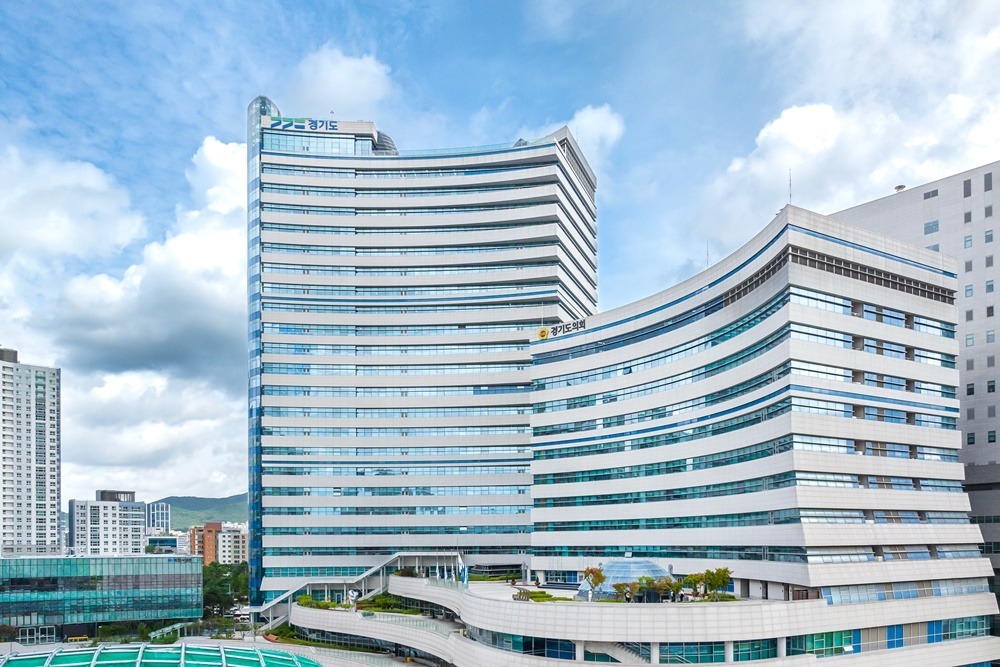
As 99% of the new residential land volume in the capital region announced by the government this year concentrates in Gyeonggi Province, an analysis suggests that policy should shift from simple volume expansion to regionally customized supply that combines jobs and wide-area transportation networks.
Gyeonggi Province and the Gyeonggi Research Institute released on the 26th the "2026 Gyeonggi Housing Policy Brief" No. 1 (New Residential Sites in Capital Region, Why Concentrated in Gyeonggi) containing these points.
102,900 of 103,900 new sites allocated to Gyeonggi…"Due to greenbelt area disparity"
According to the report, among 103,900 new residential sites in the capital region designated through the government's "8·13 Housing Rapid Supply Plan" and "10·29 Follow-up Announcement," 102,900 units (99.0%) excluding Gangseo, Seoul (1,000 units) were allocated to Gyeonggi Province. The total scale of public housing projects currently underway in the province also reaches 70 locations and 846,000 units (expected resident population of approximately 2 million).
Gyeonggi Province and the Gyeonggi Research Institute identified the disparity in Greenbelt (Development Restriction Zone) area as the structural background for new residential sites concentrating in Gyeonggi. Gyeonggi's Greenbelt area is 1,131 ㎢, 7.6 times larger than Seoul's (149 ㎢). The analysis points out that whenever concerns about Seoul's housing market emerged, there was an ongoing practice of supplying residential sites by lifting Greenbelt restrictions in Gyeonggi areas adjacent to Seoul's boundaries. In fact, all six candidate sites for the 10·29 new sites were designated as Greenbelt areas within 5 km of Seoul's boundary.
"Proximity of residence and workplace·Regional demand mismatch…Need for location consultation and infrastructure cost sharing"
The report diagnosed that central government-led site selection fails to sufficiently reflect job distribution and actual housing demand by region. While 86% of the increase in knowledge-based manufacturing workers in the capital region over the past decade (2014-2024) concentrated in Gyeonggi Province, site designation has been driven by proximity to Seoul, resulting in insufficient housing supply near industrial complexes with proximity of residence and workplace.
The gap between demand within the province and supply capacity was also raised. The estimated new housing demand from household growth in Gyeonggi from 2025-2030 is 77,000 units annually (total 464,000 units), while the estimated annual construction starts in the province is 162,000 units, 2.1 times the household growth demand. Additionally, the report pointed out that in areas like Seongnam and Anyang where transaction prices have risen, the focus is on small-scale sites, whereas large-scale volumes are deployed in Gimpo and Pyeongtek where prices have fallen, showing mismatch between regional market conditions and supply scale.
Gyeonggi Province presented improvement tasks including: △Reflecting regional demand, jobs, and transportation conditions through local government participation from early site selection stages △Expanding wide-area and living infrastructure to match move-in timing △Central and local government cost sharing for infrastructure installation.
Gyeonggi Governor Choo Mi-ae stated, "The mere supply number of 850,000 units does not reveal the infrastructure and financial·administrative burden that Gyeonggi will shoulder after housing is built," and "Rather than the central government unilaterally determining volume, it should sufficiently consult with Gyeonggi Province while considering industry, jobs, wide-area transportation networks, and residents' needs before determining locations."
Government pushing for speed, local governments considering capacity…Finding balance point is task
This report illustrates the difference in perspective between the central government, which prioritizes absorbing inflow from Seoul and rapid supply signals, and local governments, which emphasize self-sufficient functions and urban capacity.
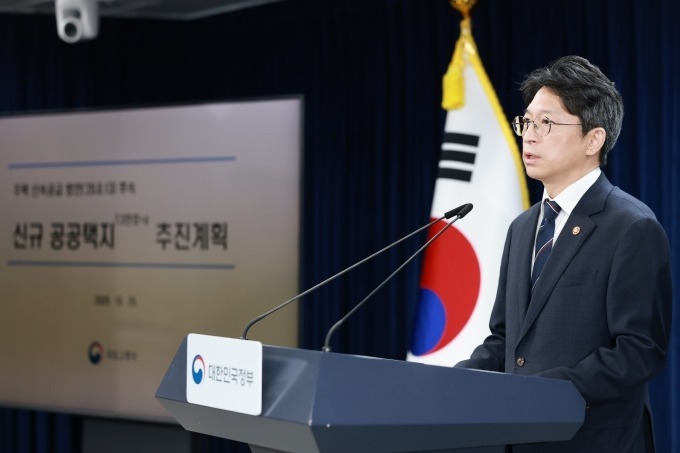
The Ministry of Land, Infrastructure and Transport stated at the time of announcing new sites last month, "Candidate sites are located within approximately 5 km of Seoul's boundary and are Greenbelts already damaged with low environmental conservation value," and "Major sites within Seoul such as Yongsan are also under substantive consultations with Seoul City." Voices are growing that for the capital region housing supply policy to be effective, rapid site securing must be accompanied by consultations between central and local governments on wide-area transportation network construction and resource sharing.

Loading comments…