


Gyeonggi Province Activates Emergency Transport Measures with Buses and Taxis in Preparation for Railway Strike
Seoul Metro and Korean Railroad Corporation have announced strikes, and the Metropolitan Area Rapid Transit (GTX)-A labor union is also showing signs of a strike, raising concerns about disruptions to Seoul Metro Lines 1-8, metropolitan railways including the Gyeongui-Jungang, Su-In Bundang, and Gyeonggang lines, and GTX-A operations.
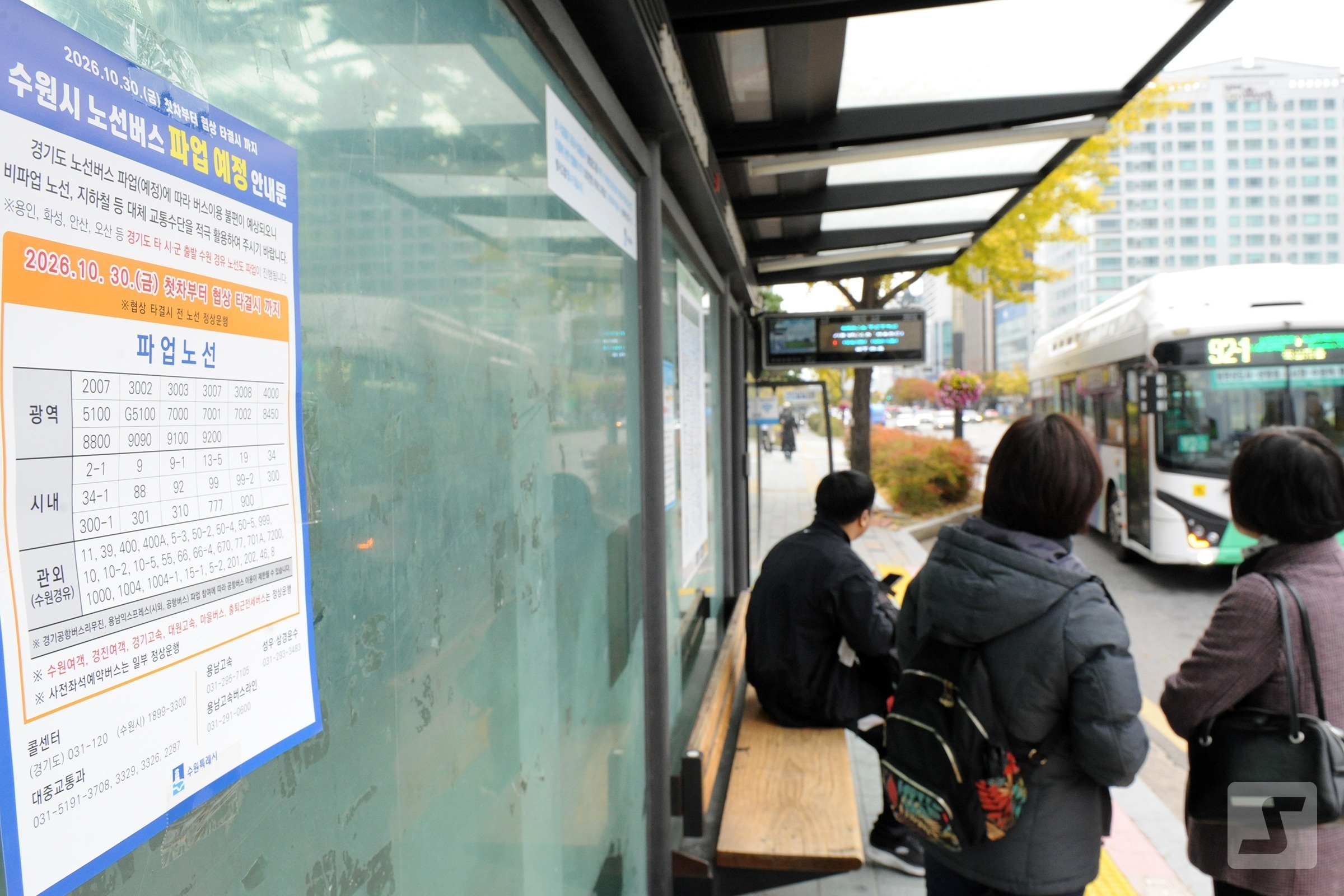
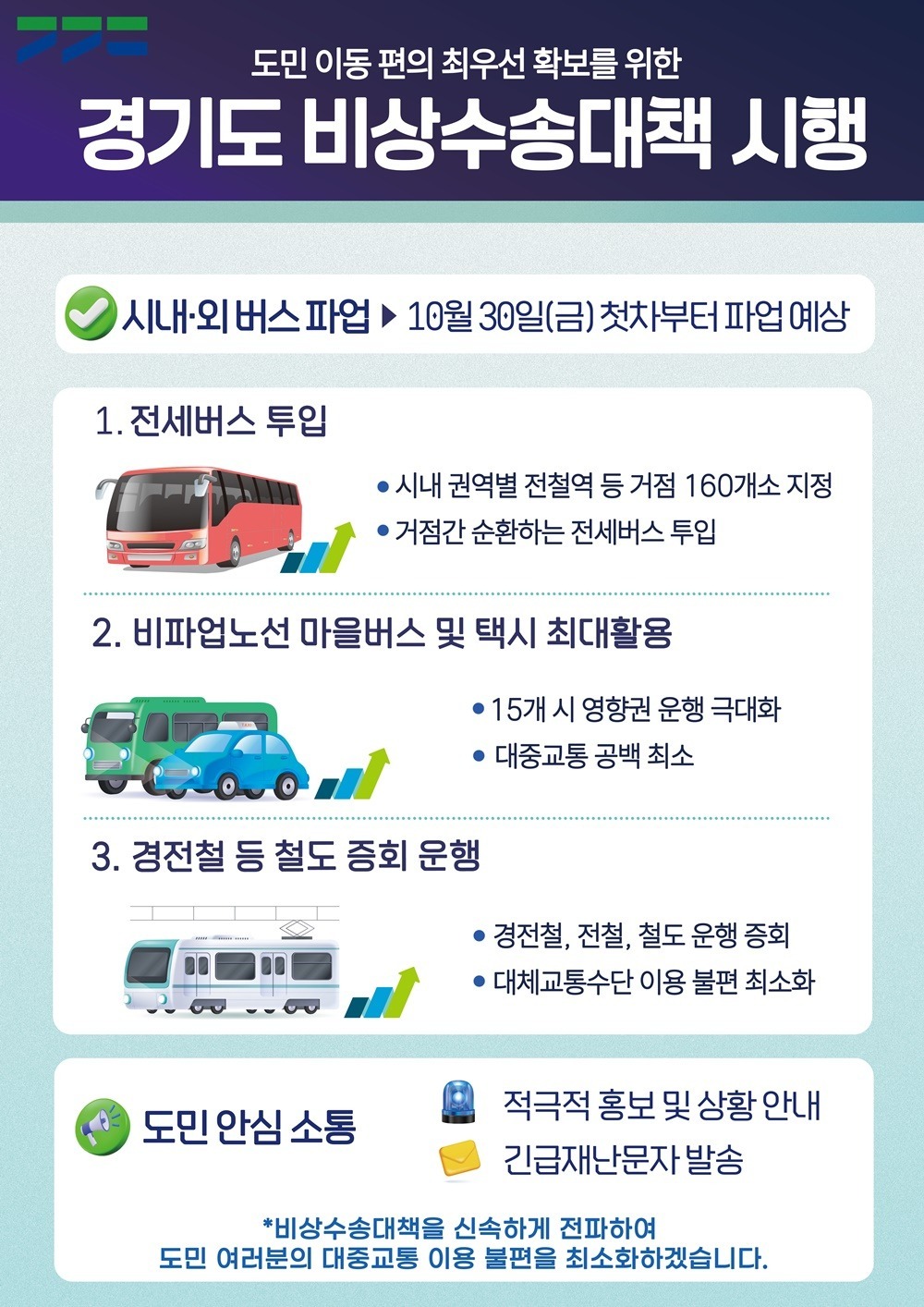
In response, Gyeonggi Province stated on the 23rd that it will prepare emergency transport measures such as increasing bus service and extending the last departure times of village buses to minimize damage to residents in preparation for a potential strike by major railway operators.
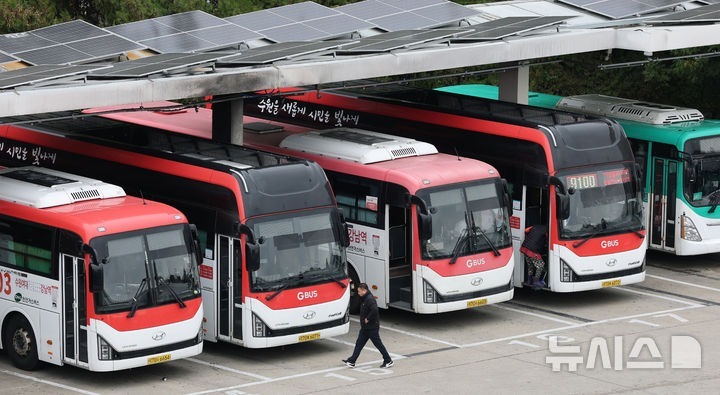
The province plans to deploy 38 reserve vehicles to city and metropolitan bus routes where congestion is expected during commute hours, increasing the number of trips by 56, and is considering additional charter bus deployment if congestion persists.
For intercity buses, the province will increase trips by 93 on 28 routes across five regions and has requested cooperation from four taxi associations within the province. Village buses will implement concentrated deployment during commute hours and extend the last departure time by one hour.
The province will operate an emergency transport response center 24 hours a day from 9 a.m. the day before the strike until the situation ends, and will establish a real-time information-sharing system with 31 cities and counties to quickly provide information on the railway strike schedule and alternative transportation service details.
Lee Cheol-gyu, Head of the Railway Operations Division at Gyeonggi Province, said, "If the railway strike becomes a reality, we will actively utilize alternative transportation such as buses and taxis to minimize inconvenience to residents. We ask residents to check real-time traffic information during the strike period."
Loading comments…