


Hwaseong City, Population 500,000, Takes Flight as 'Most Desirable City'
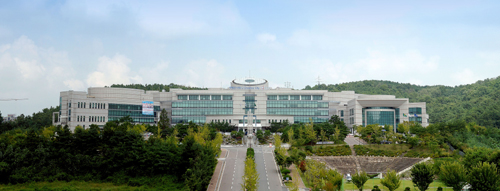
Hwaseong City, on the verge of entering the ranks of metropolitan cities with a population of 500,000, is positioning education and childcare as keywords for city development and creating the finest educational environment in the Republic of Korea.
Hwaseong City, which was a small to mid-sized city with a population of 210,000 when it was upgraded to city status in 2001, will enter the ranks of a 500,000-population metropolitan city as early as early next week or, at the latest, by the end of this month.
● 14th largest city nationwide with 500,000 residents
A metropolitan city with 500,000 residents ranks ninth in Gyeonggi Province and 14th nationwide. The city recorded the nation's highest rate of population inflow for three consecutive years from 2007.
The city's growth was made possible by urban conditions including large-scale residential development projects such as Dongtan New City, a well-connected transportation network, and the highest number of companies in Gyeonggi Province.
Hwaseong Mayor Chae In-seok said, "I will lead the city's development through education and childcare," and "I plan to create Korea's finest educational and childcare environment so that parents will want to live in Hwaseong City."
Mayor Chae stated, "We will devote all administrative capabilities to this endeavor and are currently developing an independent educational model."
Accordingly, the city is establishing an innovation education task force team and focusing on developing educational models including an education-integrated facility where schools and residents can participate together (tentatively named Multiplex H-education), measures to recruit outstanding teachers, and plans to normalize public education through level-based and customized education.
Mayor Chae In-seok said, "Through the designation of an innovation education district being prepared by the Gyeonggi Province Office of Education, we plan to lead city development through differentiated education unique to Hwaseong City, moving beyond conventionally standardized schools."
● At 500,000 population, provincial affairs can be handled directly by the city; general-purpose districts can be established
When becoming a 500,000-population metropolitan city, the city will be able to directly handle provincial affairs according to the criteria for division of affairs by type of local government in Article 10 of the Local Autonomy Act.
Accordingly, the city can handle 18 affairs and 42 business items including public health and medical care, local public enterprises, housing construction, land subdivision business, urban planning, urban redevelopment, environmental conservation, construction machinery management, auto transportation business, local civil service personnel affairs and quota management, land survey affairs, food manufacturing, management of cemeteries, crematoriums and columbaria, social welfare facilities, high-pressure gas, urban gas, and applications for local bond issuance authorization.
First, to improve residential environments, the city can establish "basic plans for urban and residential environments" on a 10-year basis covering residential environment improvement projects, housing redevelopment projects, housing reconstruction projects, and basic directions for urban environment improvement projects.
Additionally, designation of general industrial complexes and urban advanced industrial complexes will be handled by the city. In particular, in the organizational sector, two general-purpose districts can be established or one new bureau can be created.
According to Article 175 of the Local Autonomy Act and Article 118 of the Enforcement Decree of the Local Autonomy Act, a metropolitan city with 500,000 or more residents that can receive special provisions refers to a city where the population registered with the resident registration on the last day of the previous year in the relevant jurisdiction is 500,000 or more for two consecutive years at the end of each year.
However, if a 500,000-plus metropolitan city subsequently experiences a population decline such that the population averaged from the end of each quarter of the previous year for two consecutive years falls below 500,000, it will be excluded from the 500,000-plus metropolitan city category from the following year.
● Future development direction: 'Education and childcare'
Hwaseong City, which was a small to mid-sized city with a population of 210,000 at the time of its city status upgrade in 2001, has been experiencing unprecedented urban growth, recording the nation's highest rate of population inflow for three consecutive years from 2007.
As the city with the highest number of companies in Gyeonggi Province and the highest urban competitiveness in the province, Hwaseong City is looking forward to an even brighter future with the opening of Universal Studios Korea Resort, a world-class theme park in 2014, the construction of Songsan Green City, and the construction of Dongtan 2 New City with a scale of 111,413 units (population of 279,000) scheduled for occupancy in the second half of 2014.
Mayor Chae In-seok said, "The city will grow beyond a 500,000 population to become a city of one million by 2015," and expressed optimism about the future, saying "it will emerge as the world's finest city and Korea's best city."
Nevertheless, problems such as indiscriminate overdevelopment due to rapid urban growth, resulting environmental destruction, traffic congestion, and unbalanced regional development are emerging.
To address these issues, the city has chosen the card of 'education and childcare'. <Related article: September 15 report>
Mayor Chae In-seok said, "Many workers at companies located in the city are commuting from Bundang, Suwon, and Gangnam to pursue better educational environments rather than living in our city," and "If we improve the educational environment and enable them to settle in our city, we can alleviate traffic congestion and revitalize the local economy."
Additionally, Mayor Chae expressed confidence that "by introducing a local food system linked with eco-friendly free school meals, we can address indiscriminate overdevelopment and resolve regional imbalance issues through the revitalization of rural economy."


Loading comments…