


Old Roads of Hwaseong as Cultural Tourism Resource
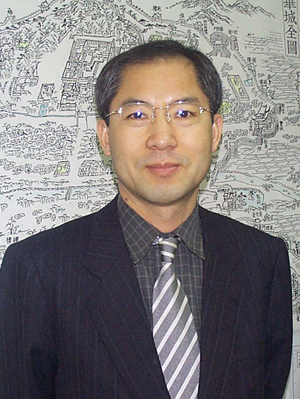
Kim Chung-young, Director of Suwon City's Construction and Transportation Department, has drawn attention after it became known that he is set to receive a Ph.D. based on a research paper on the topic of Hwaseong's old roads.
Director Kim is scheduled to receive a Ph.D. in Urban Planning on the 23rd of this month at Kyungwon University for his dissertation titled "Analysis of Changes and Characteristics of Suwon Hwaseong Old Roads and Research on Conservation Methods."
His dissertation, which passed doctoral thesis examination in December last year, analyzed the formation process and intrinsic meaning of Suwon Hwaseong's old roads, their current state and historical changes, characteristics, and conservation methods.
His doctoral thesis added the concept of "old roads" preservation to Hwaseong restoration, which currently proceeds with a focus on facilities.
In other words, it proposed that beyond cultural heritage restoration, discussions are necessary to find the identity of Suwon Hwaseong as a historical and cultural city centered on old roads.
In particular, based on Suwon's cadastral map of 1911, it takes the view that through the changes in old roads within Suwon Hwaseong over the period of Japanese colonial rule, liberation, economic development, and the registration as a UNESCO World Cultural Heritage site, the history and identity of regions formed around old roads should be restored together.
According to his dissertation, of the 206 old road routes within Suwon Hwaseong, 154 routes, accounting for 59%, have been altered, disconnected, or disappeared.
Regarding this, Director Kim points out that cultural heritage preservation in the West preserves historical traces as they are while simultaneously achieving regeneration through communication with the present, so that past and future coexist.
He emphasized, "Rather than tourism where visitors only tour facilities for 2 to 3 hours and leave, it should become stay-type tourism where visitors spend extended time through old roads and properly experience the history and identity of Suwon Hwaseong."
Director Kim, who began seriously writing his doctoral dissertation in 2008 and even rented a small study room to dedicate himself to his research, has been known for his special affection for the region, having documented changes in Suwon and Suwon Hwaseong through photographs since his days as a frontline field civil servant.
Director Kim said, "The starting point of this dissertation was the question of how to preserve the old appearance of Suwon Hwaseong and develop it as a 21st-century cultural tourism resource."
Loading comments…