


Recruitment Irregularities Found in 7 of 8 Agencies Under SME Ministry
Recruitment and personnel affairs at agencies under the Ministry of SMEs and Startups have been found to be marred by misconduct.
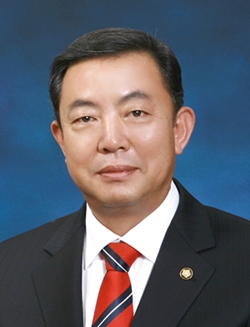
According to a "comprehensive survey and results of recruitment irregularities at subordinate agencies" submitted to the Ministry of SMEs and Startups by Rep. Lee Chan-yeol of the People's Party, a member of the National Assembly's Industry, Trade, Resources, SMEs and Startups Committee, recruitment irregularities were detected in 7 out of 8 agencies that completed inspections among 10 targeted institutions, excluding the Korea Federation of SMEs (KFSME).
Additionally, 39 final successful applicants from 6 agencies were confirmed to have been hired through improper recruitment practices and deficient operational systems.
Looking at cases by agency, the Small & Medium Business Technology Information Promotion Agency applied different evaluation criteria and standards for each selection stage and selection benchmarks (multipliers, scores, etc.) with each recruitment or decided on them after evaluation results were released, lacking objectivity and consistency.
The Korea Credit Guarantee Fund's regulations stated in Article 13 of the "Personnel Regulations" (Qualifications for Applicants) that only those with experience, such as those who worked at credit guarantee or financial institutions, could apply for staff positions, yet non-experienced applicants were also hired as new employees.
Additionally, although final successful applicants were to be determined based on comprehensive performance rankings, it was revealed that final successful applicants were determined solely on the basis of final interview scores.
The SME Distribution Center had no regulations on recusal procedures for interested parties and did not prepare an evaluation score summary table (including evaluation scores by committee member and signatures of those who tallied the scores, etc.) that could detect errors in evaluation appropriateness or score totals in advance.
Korea Venture Investment changed the field and number of recruits in contrast to the original hiring plan, eliminated applicants scoring below a certain unplanned level that was not a preference for foreign language proficiency, and hired interns by applying unfounded bonus points.
The Large-SME Cooperation Foundation conducted open competitive examinations from 2013 to 2015 without establishing a workforce supply and demand plan. Although 5 staff hires were conducted during this period, in 4 of these cases, evaluation forms for document review, written test, and interview were not retained.
Additionally, in the process of conducting special recruitment, hiring was conducted only with interviews by the chairman and executive director, and the hiring was problematic as no evaluation forms or detailed plans related to this were prepared.
The Small & Medium Business Corporation pointed out that additional bonus points for those with experience as youth interns at the corporation and an interview method conducted only with internal evaluation committee members could potentially raise issues of hiring favoritism for those with experience as youth interns at the corporation.
The SME Research Institute was found to have appointed for three years as a part-time director someone recommended by the part-time auditor's board director (chairman of the Korea Federation of SMEs) rather than through open competition.
Rep. Lee Chan-yeol stated, "Given the current situation where recruitment audits are pervasive across all public institutions, it is difficult to rely entirely on internal audits. The SME Ministry must conduct comprehensive inspections and implement strict management and supervision." He added, "The SME Ministry should establish clear guidelines related to recruitment and distribute them to subordinate agencies, and should establish a constant audit system to ensure these standards are strictly adhered to in order to root out recruitment irregularities."



Loading comments…