"What Should We Do at the Foundation This Weekend?"…Jong-jin Choi Envisions Suwon's Future
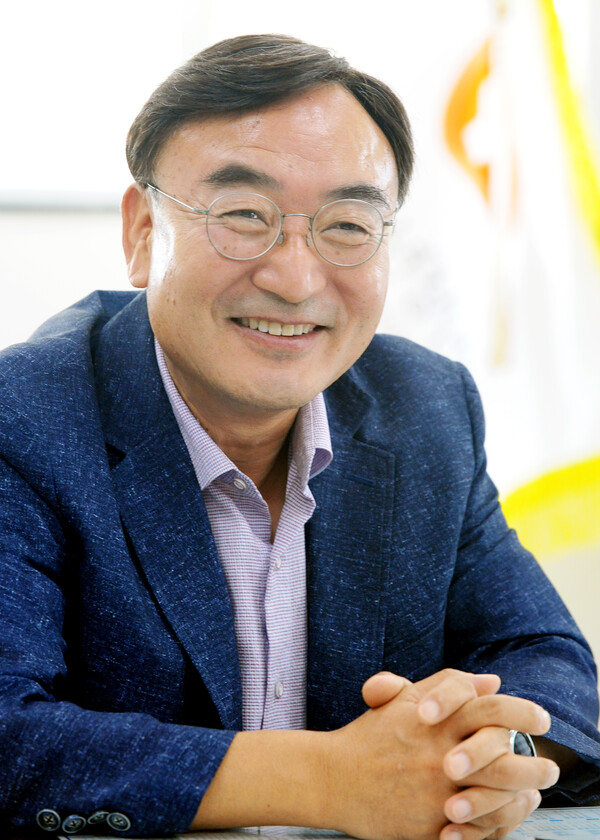
Suwon ranks among the nation's youngest cities. The youth and young adult population is the largest among all basic municipal governments nationwide. Based on the Ministry of the Interior and Safety's demographic data by age, as of July, Suwon's population aged 9–39 numbered approximately 460,000—representing 39.4% of the total population. Of every 10 Suwon residents, four are youth or young adults. In proportion to total population, Suwon rivals Hwaseong City (40.4%) for the nation's highest rate.
Suwon is literally a "city that embraces the future generation."
However, merely having a large youth population does not guarantee a city's future. Adolescents must discover their potential both inside and outside schools, and after becoming adults, they must navigate employment, housing, and relationship challenges to stand as members of society. Addressing new risks that previous generations never experienced—such as isolation and reclusion, cyber gambling, drug abuse, and deepfakes—has also become a critical challenge.
The "Suwon Youth and Young Adults Foundation" stands at the frontline of responding to these changes.
It is the nation's first youth and young adults foundation to encompass both adolescents and young adults in a single organization. We met with Chairman Jong-jin Choi to examine the evolving lives of youth and young adults and the foundation's role in responding to these changes.
The most significant change that Chairman Choi perceives on the ground is that youth and young adults no longer follow a single predetermined path.
Beyond grades and school placement, adolescents now seek to discover their potential across diverse fields—including cultural arts, media, sports, environment, and entrepreneurship. They increasingly show interest in more than just participating in designated programs; they want to voice their opinions, plan initiatives, and create tangible outcomes. Young adults likewise focus less on a single definition of success and more on finding careers and lifestyles suited to their values and preferred ways of living.
Chairman Choi stated, "As selection criteria have become more diverse than in the past, policies must move beyond uniform support and provide opportunities and experiences tailored to each individual's interests and circumstances."
The foundation is adapting its support methods to match these changes. The crucial point is understanding what youth and young adults actually want before expanding the number of programs.
One key touchpoint the foundation uses is the "Suwon Youth Portal," which boasts approximately 30,000 members. It allows young adults to find policies they need—such as employment, housing, education, welfare, and culture—in one place, while serving as a continuous channel for the foundation to connect with them. Through youth spaces like "Cheongnyeon Baramjidae" and "Cheongnyuri," the foundation links counseling, job preparation, capacity-building, and cultural and social programs.
Social media, online communities, and mom cafes—spaces where youth, adolescents, and parents actually exchange information—are also critical touchpoints. The foundation identifies new interests and demands here, reflecting them in programs. Rather than unilaterally providing services deemed necessary by the provider, this approach allows the organization to rapidly incorporate ground-level changes and trends into policy.
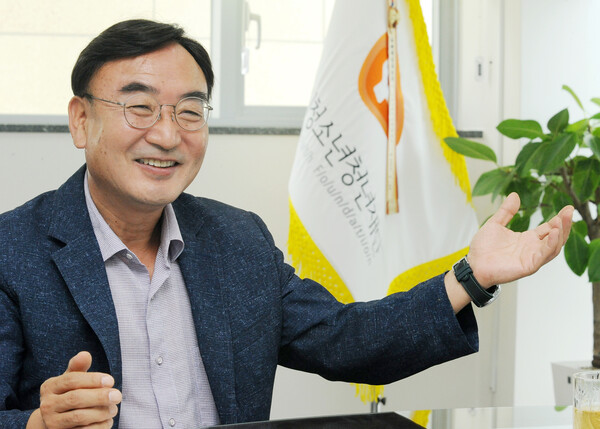
Chairman Choi found the foundation's role in "connection." He explained, "A key role of the foundation is connecting youth and young adults with needed information, people, and spaces. The force that keeps people in Suwon into adulthood is the experience of finding opportunities and meeting fellow community members."
Actively leveraging external expertise and resources to broaden support is another foundation strength.
Young adults' difficulties cannot be neatly divided into categories like employment, mental health, or housing. Prolonged job search failures can erode confidence and sever human connections, while economic hardship and housing insecurity can deepen isolation.
Consequently, the foundation emphasizes its role in connecting existing support systems—Suwon City, the Suwon Job Center, local welfare and counseling organizations, and others. While the central government and Suwon City establish the broad framework of systems and policies, the foundation serves as the frontline point of contact, directly meeting young adults in the field and connecting them to necessary services and organizations.
Chairman Choi stated, "The foundation directly meets young adults in local communities, guides them to needed services, and continuously supports their participation and change. We strive to create synergies by connecting needed policies and professional organizations in employment, welfare, mental health, housing, finance, and beyond."
The transition from adolescence to young adulthood requires especially attentive support. The support adolescents received does not suddenly become unnecessary upon reaching adulthood. Rather, as young people leave school and enter society, they face new challenges in career development, employment, finance, and housing. Particularly for ages 19–24, existing youth programs can feel out of place, while immediate entry into employment-, entrepreneurship-, and housing-focused young adult policies often finds them unprepared.
The foundation is expanding "Pre-Young Adult Transition Education" for these individuals, covering labor law, financial literacy, and jeonse fraud prevention.
Chairman Choi emphasized, "The significance of supporting both adolescents and young adults in a single organization lies not in combining organizations but in eliminating gaps in support. Growth support in adolescence will naturally lead to self-reliance support in young adulthood."
The foundation also creates connection pathways for out-of-school adolescents.
Last year, among out-of-school youth the foundation supported, 191 passed the high school equivalency exam. This year alone, 114 passed in the first testing period. Results for the second testing period will be announced next month.
The foundation supports equivalency exam success through one-on-one tutoring in weak subjects, special lectures, and EBS online classes and materials. After passing, it continues support through university entrance seminars and one-on-one college counseling. Support follows the entire growth trajectory from exam preparation through passing and subsequent advancement and career planning.
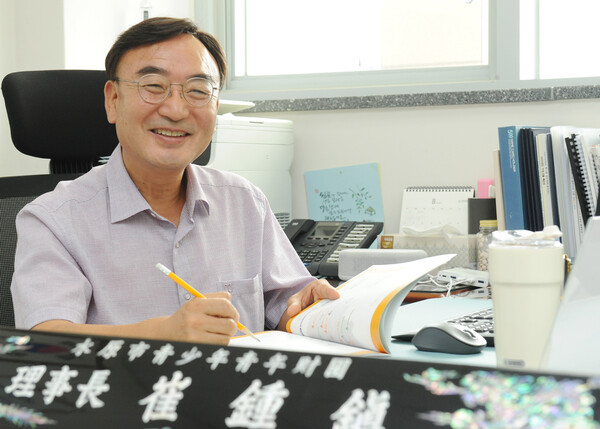
Recently, discovering adolescents and young adults who do not seek out agencies has become a critical challenge.
Isolated and reclusive young people the foundation has encountered on the ground cite interpersonal relationships and employment as core difficulties. However, as isolation deepens, it becomes increasingly difficult for individuals to seek help from institutions.
The foundation is lowering barriers to support through non-face-to-face daily recovery programs and one-on-one counseling, while strengthening coordination with community organizations such as mental health and welfare agencies.
The generative AI-based "Jump Friends" is another new pathway. Through 24-hour AI empathetic conversation, adolescents and young adults for whom human contact itself feels burdensome can open their hearts first, then transition to professional counseling and offline support.
Chairman Choi stated, "While AI cannot replace professional counseling, for youth struggling to connect with anyone, it can be that first gateway to opening up. We want small connections beginning with AI to lead to professional counseling and relationship recovery, ultimately helping individuals step into society and build their own lives."
Ultimately, the goal is not simply to increase program participation numbers.
The process by which isolated young adults leave home, form relationships with others, and re-engage in education or job-seeking is itself transformation. The foundation recognizes the need to examine not only employment outcomes but also whether job-seeking motivation and confidence have recovered, whether career goals have been set, whether education and training participation has begun, and whether stable employment is being maintained after hiring.
Chairman Choi stated, "Employment is an important indicator, but young adults' transformation begins before that stage. The foundation's role is to support young people in job-seeking at their own pace suited to their circumstances and to enable stable self-reliance after employment."
The ultimate goal is self-reliance. The foundation's support aims at rebuilding relationships and social capacity, creating the foundation for individuals to build their own lives independently.
New challenges emerge as risks surrounding youth extend "inside smartphones."
Cyber gambling, deepfakes, online violence, and even drug access through digital channels—these emerging risks spread rapidly and are difficult to detect from the outside.
Chairman Choi emphasized, "Youth protection policy must now clearly shift its focus from post-incident counseling to prevention and early detection. Rather than cutting off digital engagement entirely, we must enable adolescents to self-regulate, exercise discernment, block risks, and seek help."
The foundation operates a four-stage system: prevention education, early detection and intervention, follow-up management, and community safety network coordination. The core is establishing a structure where schools, families, police, and professional organizations that detect minor warning signs connect individuals to counseling and support rather than punishment and stigma.
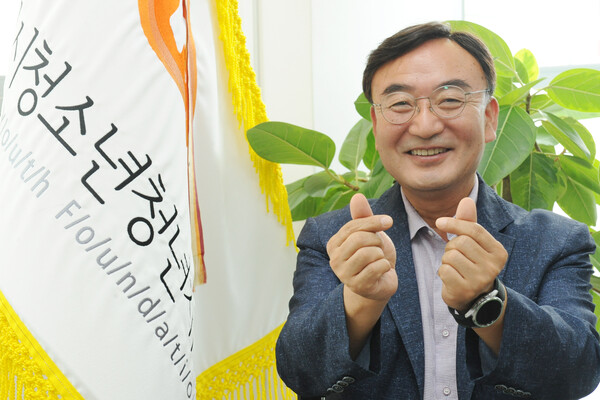
Adolescents do not remain merely subjects of protection.
Of three policies proposed to Suwon City by the foundation's Youth Participation Committee last year, two were partially adopted: institutionalization of AI ethics education for youth and establishment of a digital language safety net. Youth, as stakeholders in the digital environment, go beyond identifying problems to directly proposing solutions as policy.
The foundation is transforming to become a space where youth and young adults can visit comfortably without particular purpose. The goal is to enable them to meet friends, discover new hobbies and talents, and challenge activities they have not previously attempted without hesitation. Success is measured not merely in program participation numbers but in actual change—repeat visits, discovery of new interests, and formation of peer relationships.
Chairman Choi stated, "I want to make this a place where youth and young adults come to discover their talents and find joy. Rather than an agency people visit only for special needs, I want to create a place where anyone can comfortably visit and discover their own talents and passions."
The foundation cannot directly solve all problems for 460,000 members of the future generation in Suwon.
Instead, it proactively identifies youth and young adults needing support, connects them with the region's employment, welfare, and counseling organizations, and translates voices from the field into new policy initiatives and programs. Creating an environment where adolescents and young adults can continue seeking their own path at every crossroads of life—whether education, employment, relationships, or self-reliance—is the foundation's role.
This direction is also reflected in what Chairman Choi most wants to hear from youth and young adults.
"What should we do at the foundation this weekend?"