Controversy Eight Verification Issues Surrounding Yong Hye-in
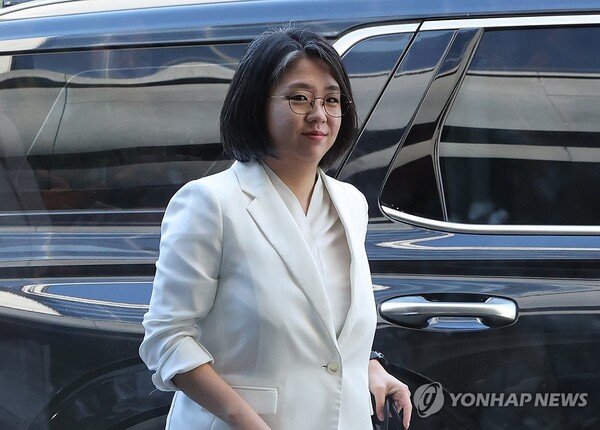
Verification issues regarding Yong Hye-in, the nominee for Minister of Gender Equality and Family, are continuing to emerge, centering on her maintaining her status as a proportional representation lawmaker, running twice for proportional alliance parties, suspicions of work concentration related to her spouse's party positions and party-affiliated personnel, and verification issues concerning her background qualifications including past organizational activities and policy expertise.
1. Maintaining proportional representation parliamentary seat and past remarks about "clinging to office"
Nominee Yong maintains the position that she will keep her proportional representation parliamentary seat for the Basic Income Party even after her ministerial appointment. While concurrent service as a member of the National Assembly and as a member of the State Council is legally possible, the convention has been for proportional representation lawmakers to resign upon taking a cabinet position.
If Nominee Yong resigns, her seat would be passed on to the next-ranked candidate from the Democratic Party for Openness, her party during the 2024 general election, and the Basic Income Party would become an extra-parliamentary party. Nominee Yong stated that the special circumstances of the Basic Income Party, being the sole National Assembly member of the party, should be taken into consideration.
Attention was also drawn to the fact that Nominee Yong criticized Kim Hyun-suk, then Minister of Gender Equality and Family, during a 2022 National Assembly inspection, saying it was "unfortunate to see [her] clinging to office," urging her to clarify her position. The opposition points out that the current stance differs from the standards applied to other ministers in the past.
2. Running twice for proportional alliance parties and state subsidy controversies
Nominee Yong was elected as a candidate of Democratic Party for Citizens, a proportional alliance party led by the Democratic Party, in the 2020 general election and later returned to the Basic Income Party through expulsion procedures.
In the 2024 general election, she was reelected as the 6th proportional representative of the Democratic Party for Openness, led by the Democratic Party, and returned to the Basic Income Party in the same manner. Nominee Yong's camp explained that it was a public electoral alliance for minority parties to enter parliament.
The opposition argues that if Nominee Yong maintains her parliamentary seat, the Basic Income Party would receive approximately 1.94 billion won in regular government subsidies for the remainder of her term and could also receive election subsidies in the 2028 general election.
Related to this, the fact that Nominee Yong argued in February 2020, before her entry into the National Assembly, to "abolish state subsidies that produce parasitic parties and introduce political basic income," has been raised once again.
3. Spouse's key party positions and "family party" controversy
Park Ki-hong, Nominee Yong's spouse, was appointed Secretary-General three days after the Basic Income Party's founding and currently serves as Vice Chair of Strategy and Planning. According to the personnel hearing request submitted to the National Assembly, Park received a total of 123.66 million won in salary from the party from 2022 to 2026.
Claims have also been raised that Nominee Yong contributed 293.6 million won as special party dues to the Basic Income Party out of the political funds she used from 2020 to 2024. This figure was calculated by analyzing the income and expenditure records of political funds submitted to the National Election Commission by the complainant. It has not been confirmed whether the special party dues were directly used for Park's salary or whether there was any violation of law.
The Basic Income Party countered that Park performed her party duties based on her extensive social movement experience and that Park's appointment as Secretary-General went through the party's approval procedures.
With the fact that Nominee Yong questioned Kim Haeng, the Women and Family Ministry nominee in 2023, about his spouse's company salary during the personnel hearing also being raised, criticism of a double standard has emerged from the opposition.
4. Response to discrimination against female activists during tenure as Youth Left representative
Park was criticized in 2017, while serving as representative of Youth Left, a progressive organization, for evaluating female activists by gender, age, educational background, and excluding some from activities. After being pointed out for failing to properly respond to sexual violence incidents within the organization, she acknowledged responsibility and resigned during her term.
Nominee Yong was subsequently elected as the successor representative, and the two married the same year. As a result, the extent to which Nominee Yong understood the issues within the organization at the time and what measures she took after taking office as representative have been raised as subjects of verification.
However, it has not been confirmed to date that Nominee Yong was directly involved in the discrimination against female activists or in handling sexual violence incidents.
5. Suspicions of "underground organization" activities in Labor Party and Youth Left
Kim Yun-young, former chair of the Labor Party Women's Committee, claimed that she, Nominee Yong, and current major figures of the Basic Income Party previously engaged in activities together in a non-public organization.
Former Chair Kim claimed that the organization educated activists and deployed them to public organizations, and female activists who raised issues about the internal sexist culture were excluded. She also demanded that Nominee Yong clarify how she evaluates the handling of sexual violence and dating violence incidents and the concerns raised by female activists at the time.
This is an assertion by former Chair Kim, and the actual nature of the non-public organization, its operational methods, and Nominee Yong's specific role have not been independently confirmed. The Basic Income Party countered that the organization and the party have no direct relationship, and Nominee Yong stated she would respond during the personnel hearing.
6. Use of Gimpo Airport VIP lounge during family vacation
Nominee Yong used the Gimpo Airport VIP lounge while traveling to Jeju Island with her family, including her parents, spouse, and children in March 2023.
Under the internal regulations of Korea Airports Corporation at the time, National Assembly members' use of the VIP lounge was restricted to when performing official duties, and parents were not included among those eligible for accompanying use.
Nominee Yong's camp explained that she marked "non-official use" on the application form and was unaware that using the lounge would be permitted since the airport approved it. She subsequently paid a usage fee of 55,000 won and apologized according to the corporation's guidance. The airport corporation also acknowledged that verification during the approval process was insufficient.
Civic groups with opposition-leaning tendencies filed a complaint with police in 2026, claiming the incident constitutes abuse of authority. A complaint does not mean a crime has been established, and no decision from the investigative authorities has been made.
7. Expertise in gender equality and controversy over family policy direction
Out of 116 bills and resolutions primarily sponsored by Nominee Yong in the 21st and 22nd National Assemblies, none were bills under the jurisdiction of the Gender Equality and Family Committee and its predecessor, the Women and Family Committee. However, Nominee Yong concurrently served on the Women and Family Committee during the latter half of the 21st National Assembly and co-sponsored 26 related bills.
Nominee Yong's camp countered that apart from standing committee jurisdiction, she primarily sponsored bills related to the protection of stalking victims, punishment for intimate partner violence, the rights of child care and long-term care system users, and the protection of youth in crisis.
There is also controversy surrounding the direction of family policy. Nominee Yong primarily sponsored the Living Partner Law, which would allow two unrelated adults to register a living partner relationship and receive social security and family support policies. The bill does not restrict the gender of the parties, making same-sex couples eligible beneficiaries. She also participated as a co-sponsor of the Comprehensive Anti-Discrimination Act.
Some conservative and religious circles oppose the Living Partner Law as a way to institutionalize same-sex unions on par with marriage. On the other hand, there is a counter-argument that since the Living Partner Law is a system separate from legal marriage designed to protect diverse living and care communities, directly characterizing it as legalization of same-sex marriage is inaccurate.
8. Suspicions of directing work to party insiders and related businesses
Since shortly after its founding in 2020, the Basic Income Party continuously paid labor management consultation fees and administrative service fees to a labor law firm. The representative of the labor law firm is Nominee Yong's campaign chairman and a member of the party's Supreme Council and previously served as the chief of staff of Nominee Yong's parliamentary office.
It was reported that the Basic Income Party entrusted the production of approximately 300 million won worth of election promotional materials to a company operated by the former Chair of the Party Policy Committee and a person who previously worked with him in the Socialist Party, around the 2026 local elections. This exceeded 20 percent of the party's total expenditures in the first half of 2026.
Suspicions were raised as to whether contracts were concentrated at businesses close to major party figures; however, it has not been confirmed to date that any fraudulent contracts or improper directives from Nominee Yong exist. The Basic Income Party explained that it was a normal contract taking into account multiple conditions including price and business capability.
전시언 기자 yourside@news-s.kr