Jang Dong-hyuk One Year Breaking Through Resignation Calls, Reversing Support Ratings... Party Renewal Gambit
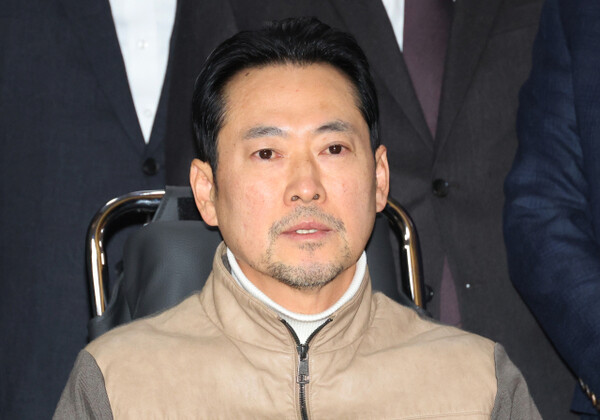
People Power Party Chairman Jang Dong-hyuk is drawing attention for whether he can push forward with party organizational renewal after accepting a poll result showing his party ahead of the Democratic Party in approval ratings just before his first anniversary in office, having held firm against repeated resignation demands since taking office.
According to political circles on the 25th, Chairman Jang plans to hold a press conference on the 26th marking his first anniversary in office, where he will share his reflections on the past year and outline his plans for party management in the second half of his term. A party-member-centered party for improving party structure and victory in the general election are expected to be key topics.
A poll released just a day before his first anniversary showed the People Power Party ahead of the Democratic Party in support.
In a party support survey conducted by Pen and Mic through Yeowon Survey of Public Opinion Co., Ltd. on 1,004 adults aged 18 and over nationwide on the 23rd and 24th, the People Power Party registered 41.7% support while the Democratic Party of Korea recorded 38.8%. The People Power Party rose 1.3 percentage points from the previous survey while the Democratic Party fell 4.3 percentage points, with a gap of 2.9 percentage points between the two parties.
However, other surveys showed People Power Party support in the 20 percent range, indicating differences among polling organizations, making it difficult to attribute this result solely to Chairman Jang's leadership effect.
Nevertheless, experts assess that the reversal in support ratings just before his first anniversary holds political significance for Chairman Jang, who has faced criticism for having difficulty expanding the party's base due to tough party management.
Chairman Jang's past year was characterized by choosing head-on confrontation rather than modifying his course in response to internal and external pressure.
Taking party leadership in August last year, Chairman Jang ended internal divisions and adopted a message of maintaining party unity to confront the Lee Jae-myung government. After taking office, he continued aggressive partisan confrontation.
In December last year, opposing the Democratic Party's push to establish a special court for insurrection charges, Chairman Jang became the first opposition leader to participate in a filibuster, engaging in unlimited debate for 24 hours. By setting a record for the longest filibuster ever, he demonstrated clarity of a fighting opposition party within his own party.
In January this year, he began a hunger strike demanding acceptance of so-called dual special investigations into allegations of Unification Church political lobbying and Democratic Party campaign donation improprieties. Chairman Jang continued the hunger strike for eight days before being hospitalized due to deteriorating health.
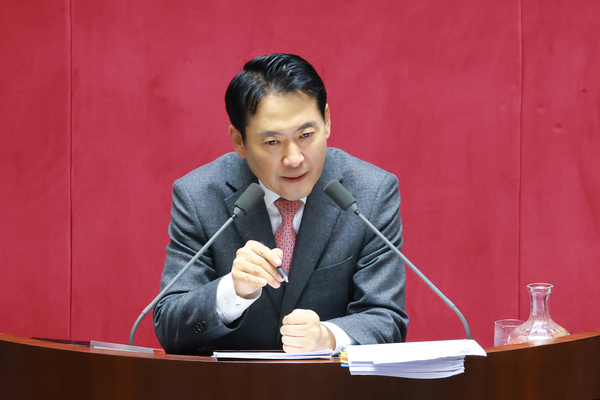
He also stood firm on internal party matters.
When the People Power Party's Central Ethics Committee decided to expel former Chairman Han Dong-hun over the member bulletin board incident, opposition continued mainly from Han-friendly factions, but Chairman Jang finalized the expulsion at the Supreme Council. Opinions within the party ranged from criticism of removing an influential politician to assessment that it was a measure to address internal conflict and establish party discipline.
After the June 3 local elections, Chairman Jang's leadership faced another test.
In provincial elections, the Democratic Party secured 12 positions while the People Power Party won in four regions—Seoul, Daegu, North Gyeongsang Province, and South Gyeongsang Province—leading to repeated calls for leadership accountability and Chairman Jang's resignation centered on non-mainstream factions and some senior figures.
Chairman Jang brought the ballot distribution scandal and election management commission mismanagement issues that emerged during the local elections to the forefront. By requesting national investigations and special prosecutions and attending related rallies nationwide, he elevated election commission issues as a new partisan confrontation agenda.
Over the past year, Chairman Jang's approach amid frequent crises has generated contradictory assessments of determination and unilateralism. While criticism exists that he deepened party division by directly confronting opposing voices, assessments also emerged that he successfully implemented his course despite external pressure and internal resignation calls.
Heading into his second year in office, Chairman Jang's gambit is shifting from partisan confrontation to party reorganization.
Chairman Jang is pursuing a plan to have all 254 party chapter chairmen nationwide submit their resignations by the end of this month, then elect them again through member voting. Discussing simultaneous non-candidacy of senior figures and infusion of young talent, he has positioned party member sovereignty as a means for generational change and organizational renewal.
This time too, internal party resistance is significant.
Some sitting members of the National Assembly from the People Power Party agreed at a member assembly on the 21st to maintain the current method of electing party chapter chairmen. The Supreme Council, which has final decision-making authority, refrained from placing the full reelection agenda for vote on the 24th and will deliberate again on the 27th.
Since its founding in 2020, the People Power Party has had no elected party chairman who completed a full two-year term. Former Chairman Lee Jun-seok served the longest at 424 days, former Chairman Kim Ki-hyun at 280 days, and former Chairman Han Dong-hun at 146 days before stepping down. If Chairman Jang maintains his position until October 25th, he will become the longest-serving party chairman since the People Power Party's founding, surpassing former Chairman Lee.
In that sense, while Chairman Jang's first year was a process of defending his chairmanship and political course amid various resignation calls, the second year presents the challenge of translating this into actual party change.
Particularly, the complete reelection of party chapter chairmen is expected to be a watershed moment for Chairman Jang's leadership, as it both realizes the member-centered party he has emphasized and shakes regional organizations centered on current and senior figures.
If it leads to organizational renewal beyond internal resistance, the assessment of determination that has followed Chairman Jang over the past year could gain weight. However, if it stalls while only amplifying conflict, criticism of unilateralism could resurface.
A political circle insider said, "Over the past year, Chairman Jang chose head-on confrontation rather than backing down whenever political crises emerged," adding, "If the past year demonstrated leadership focused on endurance, now the scorecard will be whether he can connect a member-centered party and generational change to actual party change and competitiveness in the general election."
전시언 기자 yourside@news-s.kr