Jang Dong-hyuk 1 Year Breaking Through Resignation Calls as Support Ratings Tighten...Party Overhaul as Gambit
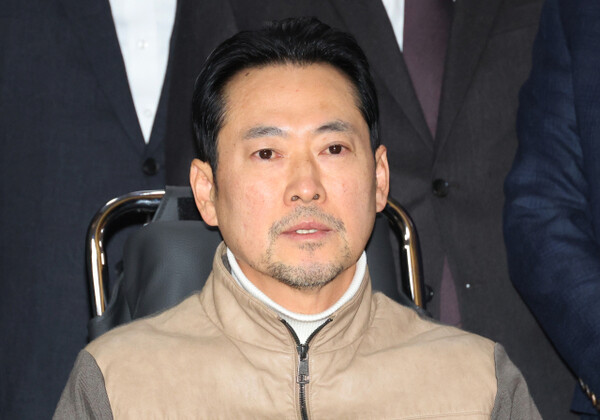
As Power Map Chairman Jang Dong-hyuk approaches his first anniversary in office, he has received poll results showing his party leading the Democratic Party, and attention is focused on whether Chairman Jang, who has not backed down despite repeated calls for resignation since taking office, can also lead the party's organizational overhaul.
According to political circles and others on the 25th, Chairman Jang is scheduled to hold a press conference on the 26th marking his first anniversary, where he will share his reflections on the past year and his plans for party operations in the second half of his term. Party quality improvement through 'member-centered party' and general election victory are expected to be the main topics.
A day before the first anniversary, a poll showed the Power Map engaged in a tight contest with the Democratic Party within the margin of error.
According to a poll commissioned by Pen and Mic to polling research firm Opinion Survey Fair on the 23rd-24th, surveying 1,004 men and women 18 and older nationwide, the Power Map garnered 41.7% and the Democratic Party 38.8%. Compared to the previous survey, the Power Map rose 1.3 percentage points while the Democratic Party fell 4.3 percentage points, with a gap of 2.9 percentage points between the two parties. However, this falls within the margin of error (±3.1 percentage points).
Other surveys show differences among research organizations, with Power Map support remaining in the 20 percent range, making it difficult to attribute these results solely to Chairman Jang's leadership effect.
However, political analysts note that the tight race within the margin of error just before Chairman Jang's first anniversary is not without political significance, given his past criticism for difficulty in expanding external support through aggressive party management.
Chairman Jang's past year was a time of choosing frontal breakthrough rather than modifying his line despite pressure from inside and outside the party.
When Chairman Jang took party leadership in August last year, he set forth a "unified front" to end party divisions and stand against the Lee Jae-myung administration. After taking office, Chairman Jang has pursued aggressive opposition to the ruling party.
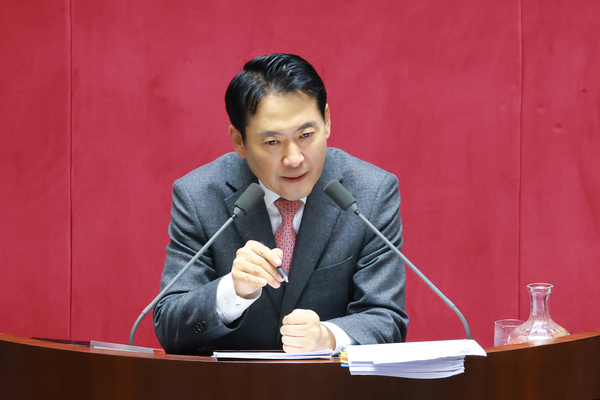
In December last year, in opposition to the Democratic Party's proposed legislation establishing a court dedicated to insurrection charges, he became the first opposition party leader in history to take to the filibuster podium, engaging in unlimited debate for 24 hours. He set a record for the longest filibuster in history, earning praise within the party for showing the clarity of a "fighting opposition party."
In January this year, demanding acceptance of the so-called "dual special investigation" into allegations of Unification Church political lobbying and the Democratic Party's campaign donation scandal, he began a hunger strike. Chairman Jang continued the fast for eight days before being hospitalized due to deteriorating health.
He did not back down on internal party matters either.
When the Power Map's Central Ethics Committee decided to expel former Chairman Han Dong-hun citing the "party bulletin board incident," while the pro-Han faction continued to resist, Chairman Jang made the final decision on the expulsion at the Supreme Council meeting. Within the party, there were both criticisms that an influential politician was purged and assessments that this was a measure to settle internal strife and establish discipline.
After the June 3 local elections, Chairman Jang's leadership was tested again.
While the Democratic Party won 12 regional administrative posts in the local elections, the Power Map won in four regions including Seoul, Daegu, North Gyeongsang, and South Gyeongsang provinces. Among the non-mainstream faction and some senior figures, demands for leadership accountability and calls for Chairman Jang's resignation continued.
Chairman Jang brought to the forefront the ballot paper non-delivery incident that emerged during the local election process and the management negligence of the National Election Commission. He demanded a national audit and special investigation and attended related rallies nationwide, elevating the election commission issue as a new agenda for ruling-opposition confrontation.
Over the past year, facing frequent crises, Chairman Jang's approach generated contrasting evaluations of "grit" and "autocracy." There are criticisms that he exacerbated party divisions by directly confronting opposing voices, while there are also assessments that he pushed through his line despite external pressure and internal calls for resignation.
As Chairman Jang enters his second year in office, his gambit is shifting from ruling-opposition confrontation to party organizational restructuring.
Chairman Jang is pursuing a plan to have all 254 local party chairman positions nationwide whose terms end this month resign en masse, followed by reelection through voting by member delegates. With discussions of veteran lawmakers stepping down and infusion of young talent, he has presented "member sovereignty" as a means for generational change and organizational overhaul.
This time too, resistance within the party is considerable.
Some incumbent members of the National Assembly of the Power Map reached consensus at a members' general meeting on the 21st that the current method of electing local party chairmen should be maintained. The Supreme Council, which holds final decision authority, did not place the full reelection agenda on the 24th and deferred the vote, with plans to discuss it again on the 27th.
Since the Power Map's launch in 2020, not a single elected party chairman has completed a full two-year term. Former Chairman Lee Jun-seok served the longest at 424 days, former Chairman Kim Ki-hyun at 280 days, and former Chairman Han Dong-hun at 146 days before stepping down. If Chairman Jang maintains his position until October 25th, he will become the longest-serving party chairman since the Power Map's launch, surpassing former Chairman Lee.
In that sense, if Chairman Jang's first year was a process of defending his position and political line amid various calls for resignation, his second year faces the challenge of translating this into actual party change.
In particular, the full reelection of local party chairmen is viewed as a watershed for Chairman Jang's leadership, as it would realize the member-centered party he has emphasized while shaking incumbent and senior-focused local organizations.
If organizational overhaul proceeds beyond internal resistance, the "grit" assessment that has followed Chairman Jang over the past year could gain strength. However, if the effort falters with only increased conflict, criticism of "autocracy" could resurface.
A political circles official said, "Over the past year, Chairman Jang has chosen frontal breakthrough rather than backing down whenever political crises arose. If last year was a time showing defensive leadership, now it will be a test of whether he can connect member-centered party and generational change to actual party change and competitiveness in the general election. That will be his report card."
The survey was conducted using a 100 percent automated interactive voice response (IVR) wireless random digit dialing (RDD) method. The margin of sampling error is ±3.1 percentage points at the 95 percent confidence level. For details, please refer to the homepage of the Central Election Opinion Research Deliberation Committee.
전시언 취재편집부문 대표 yourside@suwonilbo.kr