Feature Year of Suwon Visit 2026-2027...Adding Industry to Comfortable Tourism
Suwon, a city where visitors can experience the beautiful landscapes and history of the UNESCO World Heritage Suwon Hwaseong Fortress with their own eyes and feet, is systematically preparing for the '2026-2027 Year of Suwon Visit.' It is not merely about attracting more tourists, but also about pursuing the sustainable development of regional tourism. Examples include making it easier for tourism-disadvantaged groups to explore Suwon and creating connections between industry and tourism. Let us follow Suwon's efforts to expand barrier-free tourism and industrial tourism for the future of Suwon tourism.
◇ 'Suwon Haengcha' Reaching Every Corner of Paldalsan Slopes and Alleys
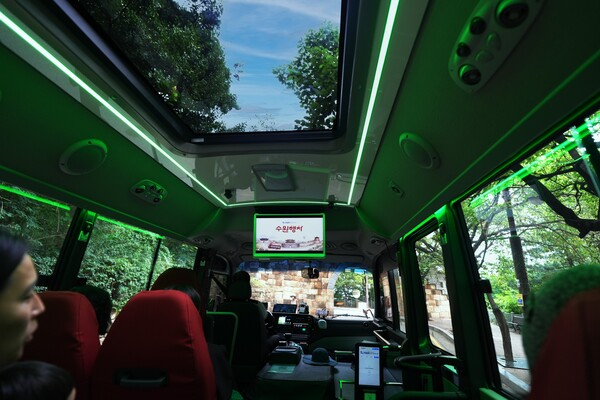
"Ding dong~ This stop is Seojangdae/ This stop is Seojangdae(English)/ 本站是 西将台(Chinese)/ 次は, 西将台(Japanese)."
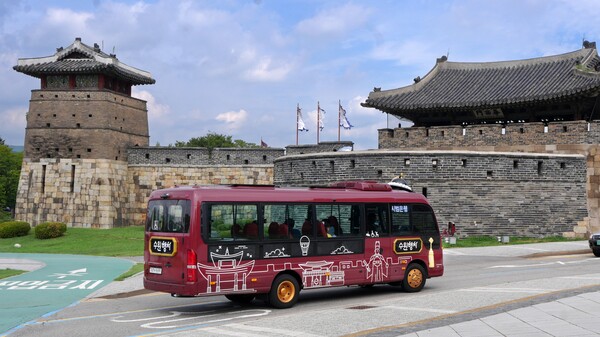
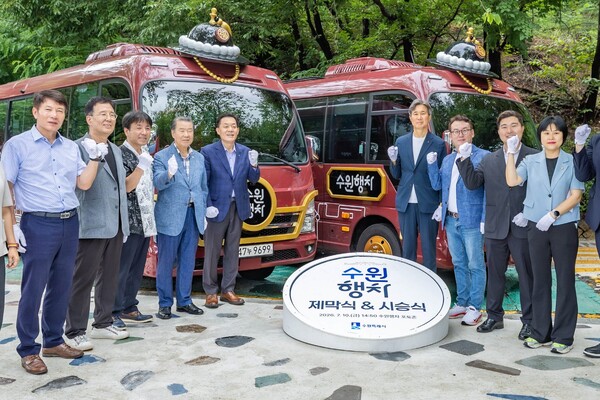
A new way has emerged for transportation-disadvantaged groups—children, elderly, disabled, and foreign visitors—to experience up close the charm of Suwon's representative tourist destination, Suwon Hwaseong Fortress. It is 'Suwon Haengcha,' a special dedicated tour bus unique to Suwon. A special red mini-bus wearing a cute hat resembling a traditional topknot hat transports transportation-disadvantaged visitors to major tourist sites that were previously difficult to access by public transportation.
Suwon Haengcha began trial operations in late July and helps conveniently explore Suwon's major tourist hubs, which can only be navigated mainly on foot. Departing from Yeonmudae, the bus passes through major tourist points including Hwaseong Museum~Hwaseong Palace~Paldalmen Gate~Former Gyeonggi Provincial Government Building~Namporru (Seojangdae)~Seongsinsa~Hwaseomun Gate~Haengridonggil~Suwon Municipal Art Museum~Maehyang Bridge~Suwon Media Center and returns to Yeonmudae. The route passes through various locations at the foot of Paldalsan, which cradles the UNESCO World Heritage Suwon Hwaseong Fortress, Hoeju-do Road, which is familiar as a drama backdrop, deep alleys of Haenggung-dong, and major tourist hubs.
The special aspect is that two buses (14-seater and 10-seater) serve as tourist buses for transportation-disadvantaged groups. The 10-seater bus features a dedicated wheelchair space for disabled visitors. Additionally, multilingual announcements in four languages guide foreign tourists. Korean, English, Chinese, and Japanese are sequentially introduced at major tourist sites, along with nearby connecting courses. Children with weak legs or elderly visitors can board the bus and pass steep uphill slopes to enjoy a panoramic view of Suwon from the top of Paldalsan.
A passenger on Suwon Haengcha said, "I came with my parents and two children aged 3 and 5, and it was great to enjoy various parts of Suwon Hwaseong Fortress from inside the cool bus," adding "I'm planning to separately visit some places that interest us based on the tourist information we received on the bus."
◇ Creating a Barrier-Free Tourism Foundation That Everyone Can Enjoy: Suwon's Initiative
Suwon Haengcha is the first result of Suwon City's 'Barrier-Free Tourism Environment Creation Project.' To establish a tourism foundation that everyone can enjoy, Suwon City is promoting a three-year barrier-free tourism project through 2028. With a total investment of 8 billion won, including 4 billion won in national funding, the city is expanding and improving tourism infrastructure around Suwon Station and Suwon Hwaseong Fortress, which coincides with the Year of Suwon Visit.
Previously, Suwon City has pursued tourism domain expansion to prepare for an aging population and increasing numbers of people with disabilities. Since 2020, it has transformed Hwaseong Palace, Jangan Gate, and Yeonmudae into open tourism sites (tourist destinations usable without movement or activity restrictions), establishing the foundation for barrier-free tourism. In particular, in line with increasing demand from tourists with disabilities and elderly visitors, the city has established a vision to set new standards for South Korea's barrier-free tourism.
In the transportation sector, the city is promoting the linkage of transportation services for the disadvantaged with tourism purposes and improving conditions at boarding and alighting points. It is installing barrier-free facilities such as ramps at major tourism information centers and advancing infrastructure improvements that can create synergies with private tourism resources. Beyond that, the city plans to develop tourism content and courses such as museum passes linking existing resources like art museums, museums, and libraries.
Particularly this year, the city is concurrently implementing the enhanced open tourism sites project to create synergistic effects for barrier-free tourism. It is improving pedestrian pathways in the Hwaseong Palace area and creating barrier-free content to make cultural heritage utilization programs accessible to tourism-disadvantaged groups. Wide-ranging improvements for barrier-free tourism are expected, including installation of bilingual braille guides, comprehensive tourism information signs with tactile and audio guidance, and advanced sign language guide services.
◇ Suwon Convention Center: Creating Connections Between Industry and Tourism
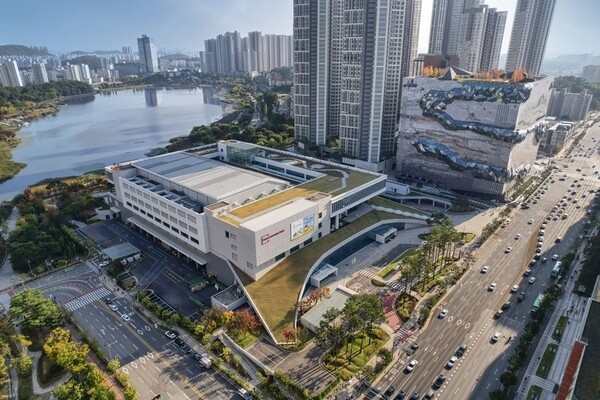
Suwon City is taking the lead in establishing an international exhibition complex industrial ecosystem in southern Gyeonggi Province and striving to link this with the development of the tourism industry. The intention is to connect participants who visit for international conferences and exhibitions with new tourism demand, allowing them to experience and consume Suwon's historical and cultural resources.
Suwon Convention Center is contributing through remarkable growth. The number of exhibition hall events at Suwon Convention Center has more than doubled from 32 in 2021 to 67 last year, and the utilization rate has noticeably increased from 26.05% to 57.97%. Corporate events using conference rooms have also tripled from 336 in 2021 to 1,065 last year. Particularly during the same period, the ratio of corporate events expanded from 34.7% to 43.0%, indicating increased private sector demand over government or public-sector events.
Leveraging this growth, Suwon City ranked 339th among 1,797 cities and regions worldwide in the 'Ranking of International Conference Hosts in 2025' announced by the International Congress and Convention Association (ICCA) in May. Rising 161 positions from the previous year, the city demonstrated recognition of its urban competitiveness in the international exhibition complex industry and its growth potential.
Suwon is also taking the lead in fostering its industrial and cultural resources as an international exhibition complex industry. Notable examples include the 'Next-Generation Semiconductor Packaging Industry Exhibition,' which exchanges centered on semiconductors representing Suwon's industry, and the 'Gwanggyo Quantum Bio Summit,' an academic-industrial platform involving universities and research institutions. The city has also expanded the intersection between the public and the exhibition industry through region-specialized events such as 'BookKids Con,' connecting publishing and content to citizens, 'Beauty Sum Suwon,' connecting the beauty industry with consumers, and 'Gallery Art Fair,' centered on art. By hosting these specialized events, domestic participants can be drawn in as tourists.
◇ Suwon International Convention Complex District: 'Igniting' Industrial Tourism Activation
The Suwon Convention Center area was designated as the 'Suwon International Convention Complex District' early this year. Centered on Suwon Convention Center, the area has concentrated accommodations, shopping, performance venues, museums, art museums, and transportation convenience facilities, receiving positive evaluation for enabling differentiated experiences. It earned recognition for its competitiveness as a global collaboration hub capable of creating cooperation and synergies between enterprises, research institutions, and cities through international conferences.
Based on this foundation, Suwon City is seeking to link the international exhibition complex industry with local culture and tourism. As part of the activation project for the international convention complex district, the city plans to expand and operate industrial tourism programs linked to international conferences, creating a Suwon-style industrial tourism model.
Earlier, Suwon City operated an industrial tourism program for participants in the 'Second Gwanggyo Quantum Bio Summit' in late May. The program was structured to allow symposium attendance and facility tours followed by night-view tours around Banghwasuryujeong Pavilion, enabling simultaneous experience of Suwon's bio and research infrastructure and Suwon Hwaseong Fortress and night tourism content. Additionally, in April, linked industrial tourism conducted in collaboration with Ajou University Hospital and Kangdong Sacred Heart Hospital drew positive response from participants in the 'Asia-Pacific Physical Therapy Federation Academic Conference 2026.'
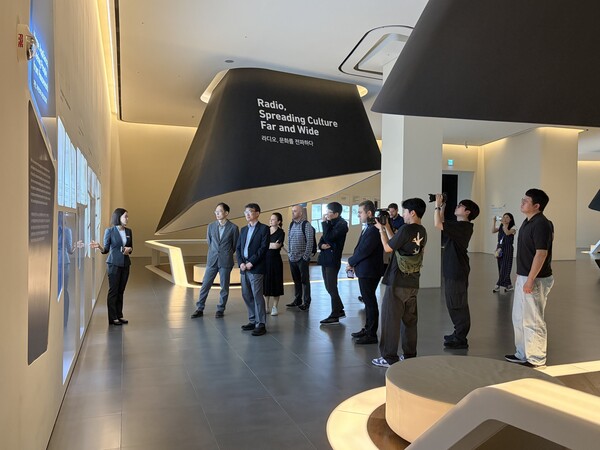
Based on these experiences, Suwon City and Suwon Convention Center plan to actively develop and utilize industrial tourism content. The city intends to activate the Suwon International Convention Complex District and link it with tourism through tourism content linked to Suwon's industrial resources such as Samsung Electronics and CJ Blossom Park, technology-experience tourism courses targeting international conference and corporate event participants, and familiarization tours for domestic and foreign buyers.
An official from Suwon City said, "Creating an environment where transportation-disadvantaged groups can conveniently tour and international conference participants can enjoy tourism is the foundation for securing Suwon tourism's competitiveness," adding "We will develop the culture and tourism industries to improve people's livelihoods and grow Suwon into a global city."