Lee Byung-hee's 100th Birthday ① How Suwon Embraced Lee Byung-hee
Editor's Note
2026 marks the 100th birthday of Baek-ung Lee Byung-hee. Having served as a seven-term National Assembly member from Suwon, he left significant marks on the city's growth through the relocation of Gyeonggi Province Office, the restoration of Suwon Hwaseong Fortress, and attracting businesses. Behind this lay his dedication in connecting the central government, corporations, public administration, and the local community. As News S marks his 100th birthday, we look back on the time shared between Baek-ung Lee Byung-hee and Suwon.
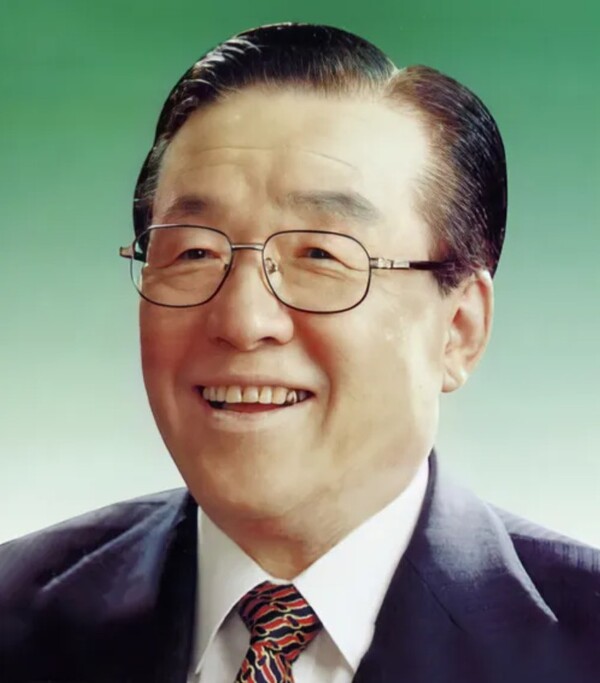
Lee Byung-hee was not born in Suwon. Yet he is remembered more strongly than anyone as a "man of Suwon."
Born on August 1, 1926, in Yongin, Gyeonggi Province, Lee Byung-hee's connection to Suwon began before politics. He graduated from Samil Middle School's high school division in 1946. He then enrolled at the Korea Military Academy and graduated as an 8th class member in 1949, embarking on a military career. When he took off his uniform and stepped into politics, it was in Suwon.
In the election for the 6th National Assembly held on November 26, 1963, 38-year-old Lee Byung-hee ran as a Democratic Republican Party candidate in Suwon. He obtained 15,493 votes (43.03%) and entered the National Assembly on his first electoral attempt.
Around the time he first became a National Assembly member, Suwon was a city at the beginning of its growth.
In 1960, Suwon's population was 900,806. Five years later in 1965, it had grown to 1,231,340. The nation's industrialization and urbanization began in the 1960s. At that crossroads, Suwon's population and urban area expanded rapidly as well.
Lee Byung-hee's political growth began during the same period. Subsequently, he was chosen by Suwon voters consecutively in the 7th, 8th, 9th, and 10th general elections.
He commanded the central political stage. He served as chairman of the National Assembly Operations Committee in 1969 and as the First Deputy Prime Minister from 1971 to 1975. He served as vice chairman of the Democratic Republican Party's Policy Committee, chairman of its Central Committee, and party vice chairman. His activities extended beyond politics.
From 1964 to 1980, he served as chairman of the Korean Basketball Association, and also held positions including president of the Asian Basketball Confederation and vice president of the International Basketball Federation.
Although his sphere of activity expanded to central politics, government, sports, and overseas, his political base remained firmly rooted in Suwon.
This relationship became even more apparent after a prolonged political hiatus.
When the new military government took power in 1980, Lee Byung-hee was banned from political activities. He did not enter the 11th and 12th National Assemblies. He was released from political restrictions in 1984 and participated in the New Democratic Republican Party created by Kim Jong-pil and others in 1987. The following year in the 13th general election, he ran again in Suwon and returned to the National Assembly.
It was 25 years after he first wore the gold badge.
South Korea's political landscape had changed dramatically. Unlike the early Third Republic when Lee Byung-hee first became a National Assembly member, direct presidential elections had been restored and the political party landscape had shifted. Suwon too was not the city of the early 1960s.
But his political hometown remained unchanged.
His last election was in 1996.
At 70 years old, Lee Byung-hee ran as a Liberal Democratic Union candidate in Jangan-gu, Suwon. His political career, which began with the Democratic Republican Party, continued through the New Democratic Republican Party and the Democratic Liberal Party to the Liberal Democratic Union. Though parties changed, the region he chose for the last time was also Suwon.
In the 15th general election, Lee Byung-hee was elected in Jangan-gu, Suwon.
6th, 7th, 8th, 9th, 10th, 13th, and 15th. From his first election at 38 to his last at 70, Lee Byung-hee was elected National Assembly member from his district seven times total.
However, the relationship between Lee Byung-hee and Suwon cannot be fully explained by the number of "seven-term member" alone.
Regional politics at that time were far more directly connected to residents' daily lives than today. In biographies of Lee Byung-hee and local recollections, the image of a politician who actively attended to residents' employment, various civil complaints, and both major and minor community matters repeatedly appears.
It is not unrelated that Lee Byung-hee earned the nickname of a "well-connected politician" in Suwon.
The biography "Well-connected Politician Lee Byung-hee," published in 2020, similarly addressed Suwon's transformation along with his life. Regional media outlets assessed that Lee Byung-hee was involved in Suwon's major changes, including the relocation of Gyeonggi Province Office, the attraction of Samsung Electronics, and the restoration of Suwon Hwaseong Fortress.
In his politics, Suwon was not merely a space for conducting elections.
While active at the center, there are recollections that he maintained broad relationships with local merchants, elders, and athletes in Suwon. His political method was connecting the political influence and personal relationships gained at the center to local issues.
Thus Suwon became more than a mere electoral district for one politician—it became his political hometown.
Lee Byung-hee, entering the National Assembly for the seventh time in 1996, did not complete his term.
On January 13, 1997, he passed away at Ajou University Hospital in Suwon. At that time, he was still a sitting National Assembly member from Suwon.
In retrospect, the period during which his political career and Suwon's development coincided far exceeded 30 years.
When he first wore the gold badge in 1963, Suwon was a city with a population of around 100,000. As industrialization accelerated, the population grew rapidly, and East Suwon development continued in the 1980s. By the 1990s, when Lee Byung-hee was last elected to the National Assembly, it had already grown into a completely different metropolis.
Suwon itself describes the 1960s and 1970s as the period when the foundations for today's urban development were laid.
Administrations changed and political parties emerged and disappeared. There were times when he could not engage in political activities.
Meanwhile, Suwon changed as well.
What did not change was his political hometown.
Suwon gave him his first gold badge, and it was Suwon that brought him back to the National Assembly after a prolonged political hiatus. It was Suwon that handed his last gold badge to a 70-year-old politician.
He was not born in Suwon. But it was Suwon that the young Lee Byung-hee came to know, and it was Suwon that nurtured politician Lee Byung-hee.
During the time Suwon was nurturing Lee Byung-hee as a politician, Lee Byung-hee was also transforming Suwon's appearance.
전시언 기자 yourside@news-s.kr