Centennial of Lee Byung-hee ③ Sowing South Korea's Future Industries in Suwon
Editor's Note
2026 marks the 100th anniversary of the birth of Baekwoong Lee Byung-hee. He served as a seven-term National Assemblyman representing Suwon and left deep marks on Suwon's growth, including the relocation of Gyeonggi Province Hall, the restoration of Suwon Hwaseong Fortress, and attracting businesses. Behind it all was his dedication to connecting the central government and businesses, civil society and local communities. The News S revisits the time Baekwoong Lee Byung-hee and Suwon shared as we commemorate the 100th anniversary of his birth.

In the 1960s, Suwon was still very much an agricultural city.
In Seodun-dong were the predecessor of the Rural Development Administration and Seoul National University's College of Agriculture, and just beyond the city limits stretched rice paddies and fields.
As South Korea entered industrialization, this landscape changed rapidly. Following Sunkyong Textiles and Daehan Textiles came Sunkyong Synthetics and Hanil Synthetics, and Geumgang Slate and a tobacco manufacturing facility took root. In Maetan-dong came Samsung Electronics, the hub of South Korea's newly emerging electronics industry at the time.
It was the process of Suwon transitioning from an agricultural city to an industrial city.
Lee Byung-hee was active in attracting businesses to Suwon. Multiple records indicate that Lee Byung-hee played a role in bringing Samsung Electronics, Sunkyong Synthetics, Hanil Synthetics, and the tobacco manufacturing facility to Suwon.
The most symbolic case is Samsung Electronics.
In the late 1960s, Samsung founder Lee Byung-chul chose the electronics industry as a new business venture. Samsung Electronics Industries was established in 1969, but South Korea's electronics industry was still in its infancy at that time.
The connection between Lee Byung-hee and Lee Byung-chul began earlier. According to related records, after May 16, Lee Byung-hee arranged a meeting between Lee Byung-chul and Park Chung-hee, establishing a relationship. He subsequently recommended Suwon to Lee Byung-chul as a hub for the electronics industry. Records also indicate that he and his younger brother Lee Byung-sung personally searched for factory sites.
The area Samsung initially showed interest in was around Cheoncheon-dong, where Sungkyunkwan University's Natural Sciences Campus now stands.
However, it was determined that the area was unsuitable for constructing a large-scale factory, so a new site was sought. Maetan-dong was ultimately chosen.
At that time, the Maetan-dong area was dotted with extensive farmland. Samsung secured a large plot of land there, and Suwon City reorganized its administrative divisions and urban planning to accommodate the factory. In 1970, Samsung Electronics began producing black-and-white televisions and launched exports the following year. As it expanded its product line to include refrigerators and washing machines, Suwon became a major hub for Samsung Electronics' growth.
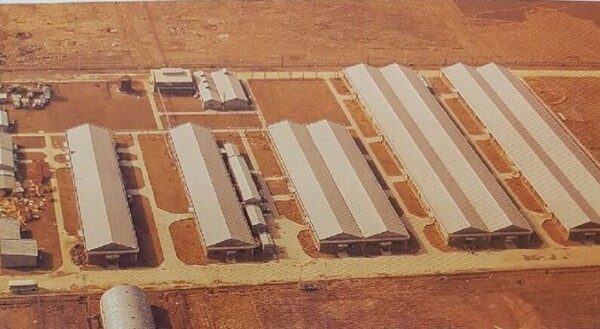
When thinking of Samsung Electronics today, the choice seems natural, but at the time it was a decision with no guarantee of success.
Samsung Electronics was a freshly launched company. There were no semiconductors, no smartphones. This company established a foothold for the electronics industry in rural East Suwon.
At that time, the textile industry was taking root in West Suwon.
Sunkyong Textiles, which would later become the foundation of today's SK Group, established its base in Pyeongdong. Sunkyong, which restored a factory destroyed by the Korean War, expanded its business from textiles to synthetic fibers and yarn. The Sunkyong Synthetics Suwon plant was established, and Lee Byung-hee lent his support throughout this process.
Daehan Textiles was located around Maesan-ro. For a long time, it was one of Suwon's representative textile factories and shaped the industrial landscape around Suwon Station.
Hanil Synthetics took root in Jowon-dong. This large-scale business facility, Hanil Synthetics, is also recorded as a company that Lee Byung-hee worked hard to bring to Suwon.
The building materials industry also arrived. Geumgang Slate, the predecessor of today's KCC, established a factory in Suwon. A large-scale tobacco manufacturing facility was built in Hwaseo-dong.
Sunkyong Textiles and Sunkyong Synthetics were located in Pyeongdong, Daehan Textiles on Maesan-ro, Hanil Synthetics in Jowon-dong, Geumgang Slate in Seodun-dong, the tobacco manufacturing facility in Jeongja-dong, and Samsung Electronics in Maetan-dong. Industrial hubs of different kinds emerged throughout Suwon.
The factories changed the city. As workers and families came seeking employment, housing and schools became necessary, and roads and commercial areas expanded. Demand for industrial and domestic water increased. Urban development projects and infrastructure expansion followed to accommodate businesses and population.
In particular, development of East Suwon accelerated, centered on Maetan-dong where Samsung Electronics was located. It became a catalyst for the city that had formed around the fortress walls and Suwon Station to expand eastward.
Change also came to Cheoncheon-dong, the area Samsung initially considered for its factory site. When Sungkyunkwan University's Natural Sciences Campus, an educational institution affiliated with Samsung, was established there, a new educational and research hub was created in Northwest Suwon.
Attracting businesses went beyond simply building a few factories and became a driving force for expanding Suwon's living areas and urban space.
Over the half century that followed, many of those factories disappeared or left Suwon. The Daehan Textiles and Hanil Synthetics factories closed, and the tobacco manufacturing facility ended its production role. Suwon's industrial structure, once centered on manufacturing, shifted to research and development and cutting-edge industries.
However, some of the companies that took root in Suwon at that time grew to become representative enterprises of South Korea.
Samsung Electronics became a world-class electronics and semiconductor company. The Suwon plant in Maetan-dong also transformed from a factory producing goods into Samsung Digital City, focused on research and development.
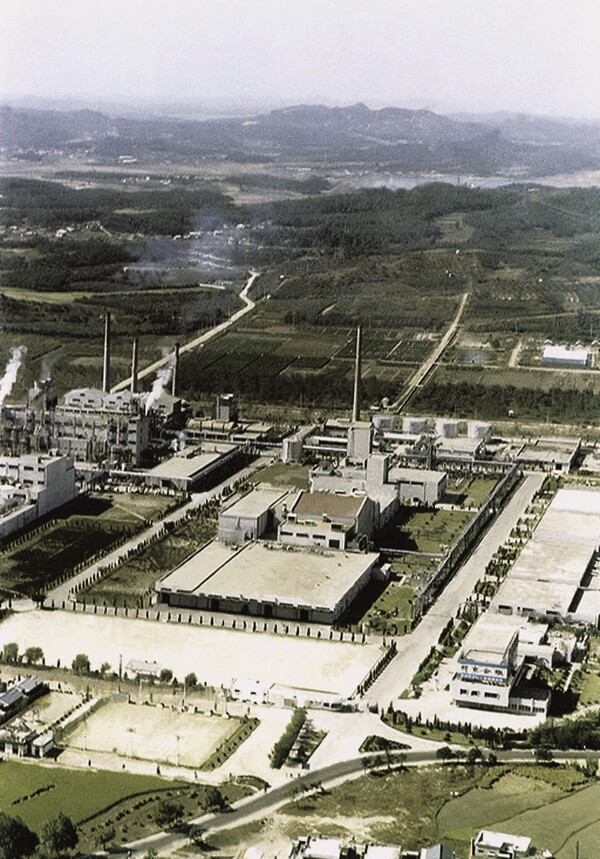
Sunkyong, which operated looms in Pyeongdong, grew into SK Group. Starting from textiles, it expanded into energy and telecommunications, and in 2012 acquired Hynix, making semiconductors a core business.
In 2026, Samsung Electronics and SK Hynix are the two pillars supporting South Korea's semiconductor industry.
Behind Lee Byung-hee's pursuit of attracting businesses lay the conviction that a region's future must be found in jobs and industry. A region's future required people, and people needed jobs. To achieve this, he worked to bring businesses and new industries to Suwon.
As a result, factories came to Suwon and people gathered. The city grew with industry, and some of the companies that thrived in this process continue to lead South Korea's core industries across generations.
Samsung Electronics, which arrived in the rice paddies of Maetan-dong in the 1960s, became a world-class semiconductor company. Sunkyong, which grew in Pyeongdong, changed its name to SK, and the group embraced SK Hynix to establish another pillar of semiconductors.
At that time, no one could have foreseen what would come to pass. But looking back now, the result is clear.
Lee Byung-hee left behind not merely factories but industries of the future. Seeds sown in his time have grown into industries that sustain South Korea's future generations today.
전시언 기자 yourside@news-s.kr