'Trimmed Samsung' vs 'Capable Apple'…Galaxy Z Fold 8 and iPhone Duo Face Off
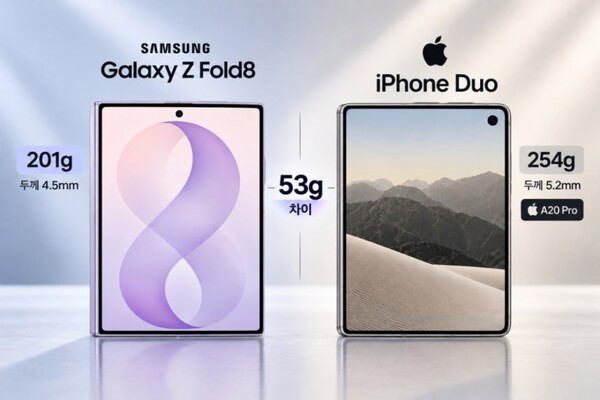
A battle between 'trimmed Samsung' and 'capable Apple'.
With Apple's debut foldable phone 'iPhone Duo' unveiled, a full-scale Samsung-Apple showdown has begun in the foldable smartphone market that Samsung has dominated.
According to Apple and Samsung Electronics on the 10th, Samsung Electronics has reduced the weight of the Galaxy Z Fold 8 to 201g and its thickness when folded to 9.7mm through eight generations of 'dieting'. Apple, on its first foldable phone, packed in the latest A20 Pro, hid the camera under the display, and added IP68 water and dust resistance, boosting its 'specs'.
Both products resemble a passport when folded and unfold into a 7.6-inch large display, but their strategies are strikingly different. Samsung leads with the lightweight and slim design refined over eight generations, while Apple emphasizes the latest performance and various features.
◇ Samsung's successful 8th-gen diet…53g lighter and 1.6mm thinner
The first battle is weight. Here, Samsung Electronics clearly leads.
The Galaxy Z Fold 8 weighs 201g. The iPhone Duo weighs 254g, making it 53g heavier.
While 53g may seem small as a number, it represents a significant difference in smartphones that users hold in their hands daily. This is especially true for foldable phones, where the weight of two displays and a hinge has been cited as a major weakness.
The iPhone Duo's weight is even heavier than the Galaxy Z Fold 5 (253g) launched in 2023 three years ago. Apple's first foldable phone, in terms of weight alone, starts at the level of Samsung's product from three years ago.
Samsung Electronics also has an advantage in thickness.
The Galaxy Z Fold 8 measures 4.5mm when unfolded and 9.7mm when folded. The iPhone Duo measures 5.2mm and 11.3mm respectively. The difference is 0.7mm when unfolded and 1.6mm in the actual folded state users carry.
Since launching the first Galaxy Fold in 2019, Samsung Electronics has continued the foldable phone 'diet' by improving the hinge, internal structure, and materials over eight generations.
As a result, the Fold 8's thickness doesn't exceed 10mm even when folded, and its weight is now comparable to regular bar-type smartphones.
This is the section where the 'generation gap' between Apple, releasing its first foldable phone, and Samsung, releasing its eighth-generation product, becomes most apparent.
◇ Apple's larger body…but 'specs' fully packed
Apple countered with features instead of weight and thickness.
Most notable is the display. The iPhone Duo applies UDC (Under Display Camera) to hide the camera on the 7.6-inch internal screen beneath the display.
When the camera isn't in use, no hole appears on the screen, allowing users to utilize the entire 7.6-inch display when watching videos, playing games, or viewing documents.
The Galaxy Z Fold 8 places a 10-megapixel camera on the internal display, leaving the camera hole exposed.
However, UDC isn't necessarily superior. Since the display exists above the camera in this structure, it's disadvantageous for light reception, making it difficult to secure image quality compared to a regular camera.
Samsung Electronics also applied UDC to previous Fold products but chose to return to the regular camera method with the Fold 8.
Ultimately, Apple's choice prioritizes display immersion while Samsung prioritizes internal camera image quality.
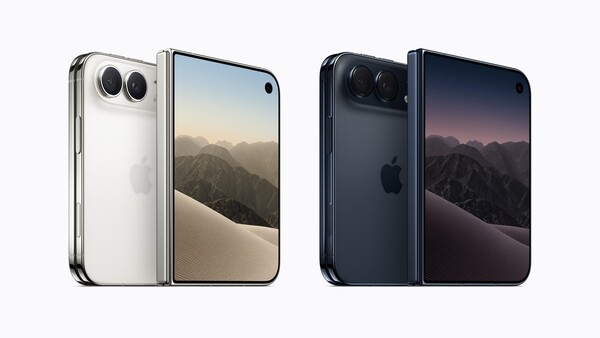
◇ Apple added IP68…even blocking the foldable's weakness 'dust'
In durability, Apple came in aggressively from its first product.
The iPhone Duo supports IP68 water and dust resistance rating. The Galaxy Z Fold 8 has IP48.
The first digit in the IP rating indicates the protection level against solid foreign particles like dust, while the second digit indicates protection against water. Looking at the numbers alone, the iPhone Duo has superior dust resistance.
Dust resistance in foldable phones is considered a more difficult feature to implement than in regular smartphones. This is because a hinge where the screen folds exists, and tiny gaps can form between moving parts.
While Samsung Electronics showed strength in reducing weight and thickness over eight generations, Apple achieved a high level of water and dust resistance rating from its first product, raising foldable completeness in a different direction.
◇ Latest brain…Apple equips A20 Pro with 2-nano process
In the AP—the smartphone's processor—Apple also packed top specs into its first foldable.
The iPhone Duo is equipped with the A20 Pro, unveiled alongside this iPhone 18 Pro. It's a chip based on the latest 2-nano process.
The Galaxy Z Fold 8 includes 'Snapdragon 8 Elite 5th Gen for Galaxy'.
Since Qualcomm is about to unveil its next-generation flagship AP this month, in terms of launch timing alone, the iPhone Duo carries a more recent AP.
However, it's difficult to determine actual performance based solely on chip generation. This is because CPU and GPU performance, as well as thermal management, power efficiency, and operating system optimization, must be considered together.
In software, Samsung Electronics' 'experience' is the weapon.
Since 2019, Samsung has sold the Fold series and continuously advanced the foldable user experience through multi-window support for simultaneous app use, drag-and-drop between apps, and large-screen UI.
Apple also customized iOS for foldables. The iPhone Duo supports split view, which runs two apps side by side on the unfolded screen.
If Apple leads with the latest hardware and the iPhone-iPad ecosystem, Samsung counters with eight generations of experience accumulated from actual foldable phones.
◇ Both cameras 'selective focus'…no telephoto
In cameras, both companies made similar choices.
The iPhone Duo features a 48-megapixel main camera and a 48-megapixel ultra-wide camera. Using the main sensor, it supports optical-quality 2x zoom, but has no separate telephoto camera.
The Galaxy Z Fold 8 similarly applies dual cameras with a 50-megapixel wide and 50-megapixel ultra-wide, supporting optical-level 2x zoom.
Both products excluded the telephoto camera found in flagship premium products.
Adding another camera would burden internal space, thickness, and weight, so this is interpreted as a choice to maintain the foldable structure.
Therefore, consumers who prioritize cameras, especially zoom functionality, may find their respective conventional flagship products more suitable than the two foldables.
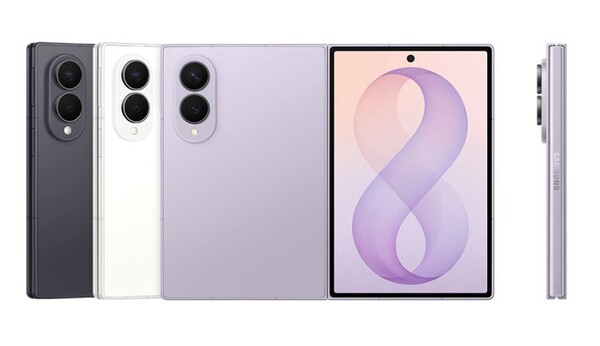
◇ Samsung's most powerful 'weapon' turns out to be price?
After all spec comparisons, one more powerful weapon Samsung Electronics possesses remains: price.
The domestic starting price for 256GB is 3.29 million won for the iPhone Duo and 2.278 million won for the Galaxy Z Fold 8.
The difference is 1.011 million won.
The iPhone Duo costs over 1 million won more in both 512GB and 1TB capacities as well. Effectively, regardless of storage capacity, a '1 million won wall' has formed between the two products in Korea.
What's interesting is the United States.
In the U.S., the iPhone Duo costs $1,999 and the Galaxy Z Fold 8 costs $1,899.99 for 256GB. The difference is only about $99.
A product that costs over 1 million won more in Korea narrows to about $100 difference in the United States.
Therefore, in the domestic market, Apple's biggest challenge will be convincing consumers of not only the features of the iPhone Duo—such as the A20 Pro, UDC, and IP68—but also the 1 million won or more higher price compared to Samsung.
◇ 'Trimmed' Samsung vs 'Capable' Apple…the choice?
Ultimately, both products wear similar 'passport-style foldable' clothing with the same 7.6-inch size, but their directions differ.
The Galaxy Z Fold 8 achieved a silhouette of 201g and 9.7mm through eight generations of 'dieting'. The iPhone Duo weighs 254g and measures 11.3mm thick—heavier and thicker—but comes equipped with various features from day one including the A20 Pro, UDC, and IP68.
Considering price, the choice criteria become even clearer.
If you prioritize the weight and thickness of the foldable phone you carry daily as well as price, the Galaxy Z Fold 8's strengths are significant. Conversely, if you value the existing Apple ecosystem, the latest AP, display immersion, and new features like water and dust resistance, the iPhone Duo becomes your choice.
Samsung Electronics has made foldable phones 'trimmed' over eight generations since 2019. Apple, arriving seven years later, has equipped its first product with multiple 'capabilities'.
'Trimmed' Samsung and 'capable' Apple. The first Samsung-Apple showdown in the foldable phone market has begun.