Exclusive Despite Gov. Choo's "near insolvency" warning…Gyeonggi Province's 'budget reduction supplementary budget' increases by over 500 billion won
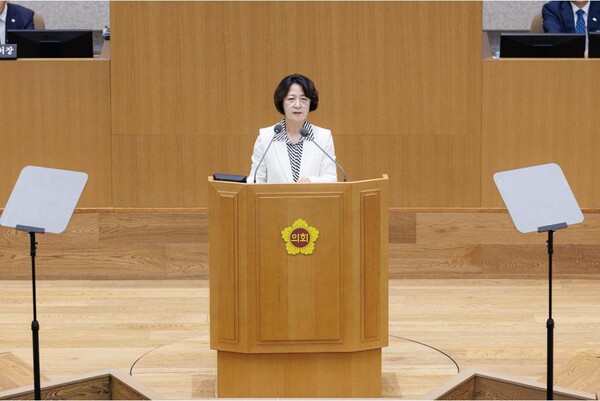
Although Gyeonggi Province Governor Choo Mi-ae diagnosed the province's finances as being in "a state of near insolvency," the total budget amount of the 'budget reduction supplementary budget plan' actually increased by 1.35% compared to the first supplementary budget.
According to Gyeonggi Province and the Gyeonggi Provincial Assembly on September 2nd, the province's second supplementary budget for 2026 amounts to 42.242 trillion won. This is an increase of 562.1 billion won compared to the first supplementary budget confirmed in May, which was 41.6799 trillion won.
This year's original budget confirmed at the end of last year is 40.0577 trillion won. The first supplementary budget increased this by 1.6222 trillion won, and if the second supplementary budget plan is passed, it will increase again by 562.1 billion won. Compared to the original budget, this represents a total increase of 2.1843 trillion won, or 5.45%.
The province described this supplementary budget plan as a 'budget reduction supplementary budget' because it reviewed 1,355 projects and reduced the budget by 546.5 billion won.
Budget reduction targets include the Electoral Commission consignment fund non-disbursement of 23.648 billion won and Bugok National Route construction compensation costs of 19 billion won, as well as existing policy projects.
The Gyeonggi Credit Guarantee Foundation contribution was reduced by 16.35 billion won, and city bus public management system operating costs were cut by 11.04 billion won. According to the supplementary budget reduction project list, youth worker support projects (7.79 billion won), Gyeonggi RE100 opportunity villages (6.78 billion won), youth interview allowances (3.5 billion won), and university student loan interest support (1.985 billion won) were also reduced.
Opportunity income programs including those for people with disabilities (1.95 billion won), artists (1.42950 billion won), and athletes (300 million won)—signature policies of former Governor Kim Dong-yeon—were also included in budget reduction targets.
Meanwhile, the province increased budgets for projects where the full annual required amounts were not reflected in the original budget.
Adding the net increase of 562.1 billion won compared to the first supplementary budget to the reduction amount of 546.5 billion won for the second supplementary budget results in a reverse calculation of approximately 1.1086 trillion won in new and increased budget allocations. However, this is a figure calculated based on publicly disclosed reduction amounts and the supplementary budget total, not a separately announced figure by the province.
The province explained that this reflects increases in national treasury subsidies and non-tax revenue, as well as shortfalls in livelihood projects.
In particular, when compiling the original budget last year, due to revenue shortfalls, only about 9 months' worth of annual required amounts were reflected for certain ongoing projects such as long-term care benefits for the elderly and school meals. This supplementary budget plan includes the remaining project funds needed to continue these projects from October through December. The province stated that it reinvested funds reduced from existing projects into these and other livelihood projects.
However, the province maintains that the overall budget increase does not represent an improvement in its own financial situation. While designated revenue sources such as national treasury subsidies increase, local tax revenue including acquisition tax is expected to decrease by approximately 300 billion won compared to previous projections.
Ju Hyung-chul, Vice Governor for Economy of Gyeonggi Province, stated, "The principle is to boldly reorganize budgets for unnecessary and routinely continued projects or projects with minimal results relative to invested resources, and to reinvest them in projects that residents can actually feel."
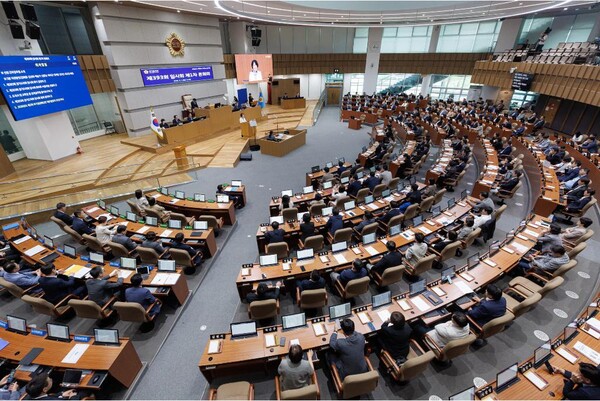
The Gyeonggi Provincial Assembly's Republican party criticized the budget cuts as being made through an allocation method by office and division rather than based on project validity or performance. The Republicans plan to verify the project basis for the 546.5 billion won in reductions and details of resource utilization during the supplementary budget review process.
The Gyeonggi Provincial Assembly plans to deliberate the second supplementary budget plan by September 18th.
전시언 기자 yourside@news-s.kr