"We Have Two Teachers, So Learning is Even More Fun and Exciting!"…Maesan Elementary Creating an Inclusive Classroom [Our Neighborhood S]
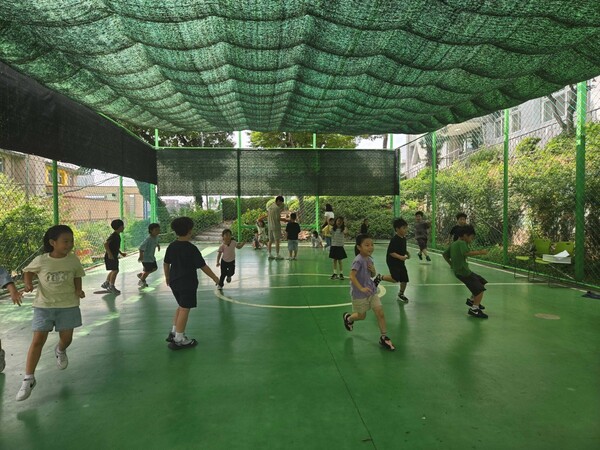
Maesan Elementary School in Suwon (Principal Lim Mi-gyeong) has been selected as an operational school for the Gyeonggi Province Office of Education's Integrated Classroom Education Activity Cooperative Teacher program and announced that it will fully implement cooperative teaching with special education teachers and general teachers conducting classes together in one classroom. This measure is intended to implement an inclusive classroom that supports students with special education needs and non-disabled students to learn at their own level in the same space.
This operational program is being carried out through a cooperative teaching method in which special education teachers and general teachers jointly design and execute integrated classroom instruction. Prior to class, the two teachers engage in consultation to carefully analyze students' characteristics, learning levels, and participation methods, and during class, they divide roles to provide immediate and individualized support to students.
In the past, students with special education needs sometimes faced difficulties in following the flow of integrated classroom instruction or participating sufficiently in activities. To reduce these difficulties, Maesan Elementary is focusing on activity adjustments reflecting individual students' educational needs, role-sharing between teachers, immediate feedback during class, and expanded opportunities for participation with peers.
Prior to implementing cooperative teaching, a two-week intensive observation period was conducted to closely understand students' learning attitudes, communication methods, peer relationships, and degree of class participation in both special education and integrated classrooms. Based on this, various cooperative teaching models—including team teaching, supportive teaching, and observational teaching—are being applied in integrated classroom instruction, and students are supported to participate in learning at their own level and pace within the same classroom.
Changes in the classroom are becoming evident. Unlike traditional instruction where one teacher oversaw all students, with two teachers now working together to observe students, those who need questions answered receive help more quickly, and students who struggle with activities participate in tasks in ways suited to their level. Through this process, not only students with special education needs but all students in the integrated classroom are participating in lessons in an increasingly stable and vibrant atmosphere.
One student who participated in class said, "It's good that two teachers teach us together, so I can ask right away when I don't understand something," and added, "When we do activities with friends, class is even more fun and exciting."
Kwon Eun-song, the special education teacher overseeing cooperative teaching, stated, "Integrated education is not simply being in the same classroom, but a process in which all students participate in class and experience learning in their own way," and added, "As general teachers and special education teachers work together to think about and implement lessons, each individual student's possibilities for participation are expanding."
Principal Lim Mi-gyeong said, "As an operational school for the Gyeonggi Province Office of Education's Integrated Classroom Education Activity Cooperative Teacher program, Maesan Elementary School seeks to respect students' diversity and create a classroom where everyone grows together," and added, "We will continue to enhance the substance of integrated education based on the professional cooperation of special education teachers and general teachers, and will work to spread an inclusive school culture."
Taking this opportunity to operate as a cooperative teacher operational school for integrated classroom education activities, Maesan Elementary School plans to continuously develop its cooperative teaching model and spread a culture of integrated education in which students with special education needs and non-disabled students understand each other and learn together throughout the entire school.
Editor's Note | This article was written based on a reader's tip. We would like to hear your stories as well. Please send your valuable tips and stories to mail@news-s.kr and we will feature them in an article.