Special Report Suwon Resident Autonomy: 'Our Neighborhood Village Plans' Expand Living Infrastructure
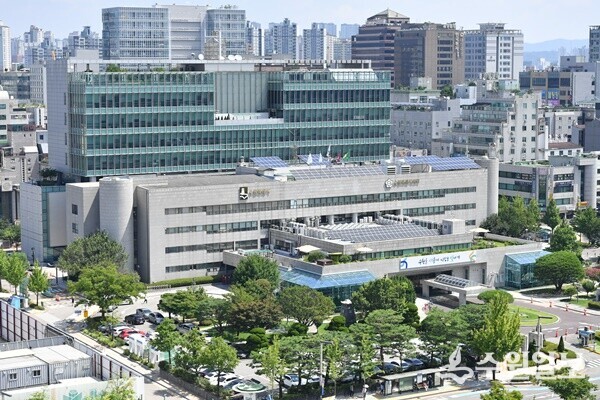
[News S=Reporter Jung Jun-sung] The starting point of resident autonomy can be said to be residents actively thinking about what their neighborhood needs. Last year, the 'Our Neighborhood Village Plan' in which each district proactively considered its own mid-to-long-term development direction and planned methods in Suwon Metropolitan City properly demonstrates this goal. Through the plans of 11 districts that can be classified as an 'infrastructure expansion type,' a key keyword in Suwon's resident autonomy development, we examine the groundwork necessary for Suwon's advancement in parking, safety, and living.
■ Parking Environment Improvement Promotes Parking Culture
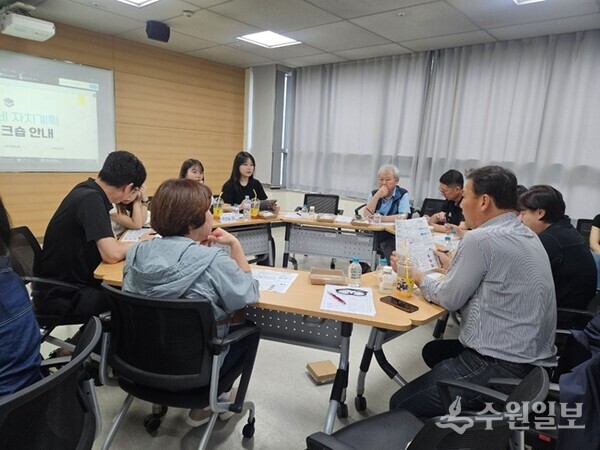
Among the various infrastructure facilities needed for neighborhood development, parking-related facilities are considered a difficult problem to solve in most neighborhoods. Among the mid-to-long-term village development plans established by Suwon residents, Gokson-dong, Gwonseon-dong, and Jowon 1-dong have centered on solving parking problems.
First, Gokson-dong, located at the easternmost part of Gwonseon-gu, set 'Change Together, a Good Place to Live in Gokson-dong' as its vision. With the establishment of new apartment complexes and an influx of new residents, as well as one-room officetel communities becoming firmly established where long-time residents live, it is a neighborhood where diverse characteristics coexist. Among these, solving parking problems was identified as a common goal. In a survey of 163 Gokson-dong residents to establish the village plan, 58.3% of residents cited improvements to illegal parking as a priority. Methods to address the issues of insufficient parking spaces in one-room areas and deteriorated pedestrian environments due to disorderly roadside parking were the main focus. Developing business ideas for parking environment improvement projects, the village plan calls for promoting overnight parking implementation and orderly parking culture in the short term, and securing parking spaces through road dieting—adjusting road widths—in the mid-to-long term.
Gwonseon 1-dong residents, facing similar problems, established the village vision 'Hand in Hand, Building Gwonseon 1-dong Together,' incorporating ideas for parking and traffic infrastructure expansion in their master plan. Gwonseon 1-dong residents analyzed that while the village is a traffic hub where Gyeongsu Boulevard and Gwonseon-ro pass through, improvements to insufficient parking spaces and illegal parking are necessary. The idea is to promote parking environment improvement projects such as illegal parking crackdowns and campaigns, and connect pedestrian paths to ensure both pedestrian and traffic safety. In the long term, the district plans to implement one-way traffic systems in alley sections as a comprehensive measure to solve both traffic congestion and parking problems.
Jowon 1-dong, home to the Suwon Sports Complex and Suwon KT Wiz Park, also addressed parking problems in its neighborhood autonomy plan. It identified parking lot development as the first practical method to realize its vision of 'Clean, Safe Jowon 1-dong.' There was consensus on the need to create temporary parking lots using abandoned private or shared land scattered throughout the neighborhood. A development direction emerged to create public parking lots near traditional markets to create synergy with surrounding sports facilities and revitalize the market.
■ Public Safety and Traffic Safety as Major Focus
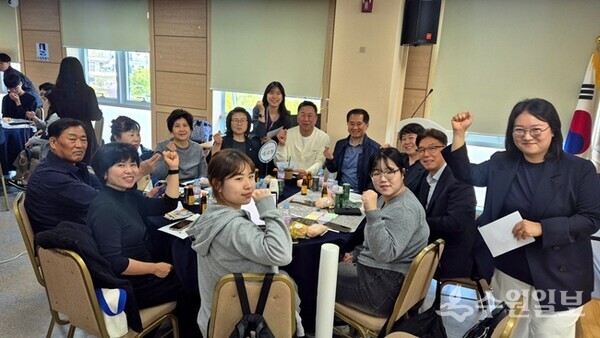
Residents emphasizing the development of safer neighborhoods made safety infrastructure expansion a major agenda item and formulated alternatives. Neighborhoods with public safety and traffic safety as major focus include Mangpo 1-dong, Maegyo-dong, Pajang-dong, and Maesan-dong.
Mangpo 1-dong is a neighborhood with many children and teenagers, with high demand for cultural facilities and programs targeting them. Based on residents' shared sense that children and teenagers must be protected together, they created the slogan 'Safe and Good Place to Live in Mangpo 1-dong' with the meaning of creating a safe neighborhood. The goal of creating a neighborhood strong in crime prevention where residents of all ages can move about with confidence was identified as the first priority, and establishing crime prevention boxes and police boxes to reduce public safety gaps was selected as a mid-to-long-term task.
Maegyo-dong, rich in modern cultural resources and adjacent to natural resources such as Paldalsan Mountain and Suwon Stream with high potential, identified youth and pedestrian safety as major concerns and created the vision 'Maegyo-dong: Exchanging Each Moment to Become One.' Traffic safety was identified as a keyword for village development, with strong will to improve the pedestrian environment in areas with vulnerable pedestrian paths and mixed vehicle lanes, steep slopes, and other challenges. Maegyo-dong plans to install pedestrian safety devices on steep slope sections as a short-term project and to improve pedestrian path environments including heated stair installation on steep slopes as a long-term project.
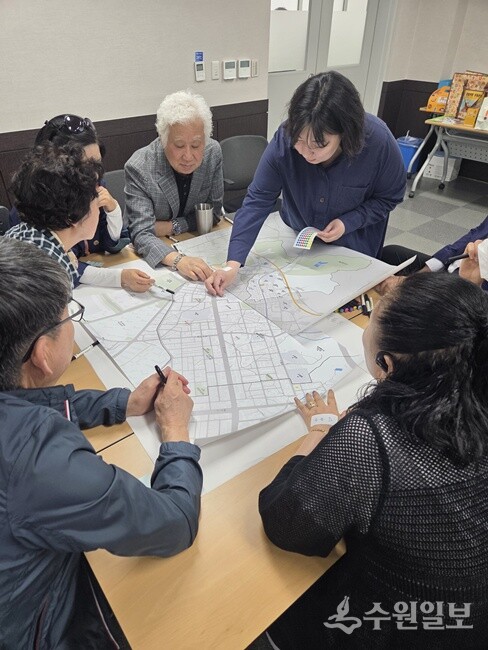
Pajang-dong, Suwon's gateway neighborhood, also makes creating a safe neighborhood a major agenda. While rich in natural environment and historical resources, restricted development and high obsolescence made securing safety infrastructure one of the prerequisite conditions for neighborhood development. The goal is to prioritize resolving dangers on school routes and pedestrian paths and improve the traffic environment around multi-use facilities such as large marts, administrative welfare centers, and daycare centers. The long-term vision includes additional closed-circuit television (CCTV) installation and overpass and parking lot expansion.
Maesan-dong, home to Suwon Station and recognized as a center of transportation and commerce, established its neighborhood autonomy plan with the vision 'Beginning of Global, Gateway of Suwon—Maesan-dong.' It aims to implement its future vision of a safe neighborhood through pedestrian-focused street environment improvements and safety facility expansion as implementation strategies. The district plans to conduct campaigns implementable by shops such as 'Leaving Lights On When Closing,' brighten alleys with floor guidance lights and LED address signs, and create small-scale public parking lots on vacant land as long-term plans.
■ Village Development Through Living Infrastructure Expansion
Some neighborhoods seek village development through expanding living infrastructure to enhance quality of life. These include Maetan 3-dong, Yulcheon-dong, Jeongja 1-dong, and Jeongja 3-dong.
Maetan 3-dong identified problems such as insufficient parking space, poor pedestrian environment, and building deterioration through on-site surveys. Residents then selected pedestrian-friendly neighborhoods as the core keyword for a village they build and maintain together, based on which they created the slogan 'Cultural Neighborhood Built Together—Maetan.' While proposing indoor community spaces, parking lots, and lighting installation in the short term, they also established plans to implement projects such as Woncheong Stream bicycle path expansion and Maeyeoul Park nighttime lighting improvement in the mid-to-long term.
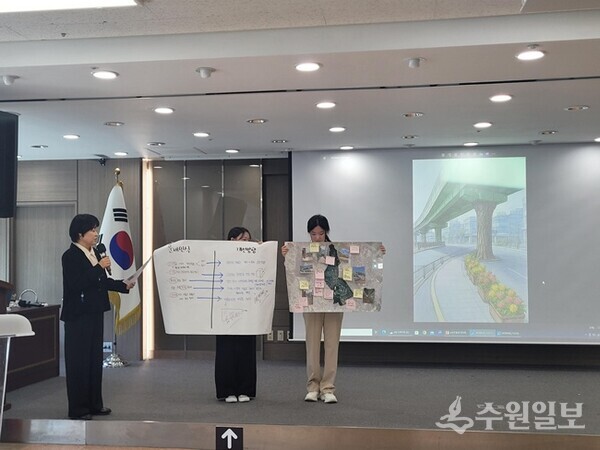
Yulcheon-dong, which has two reservoirs and Sungkyunkwan University, has the village plan vision 'Yulcheon-dong—A Neighborhood Where Upper and Lower Yulcheon Connect, Share with the University, and Nature is Beautiful.' Focus is placed on improving the space under the elevated highway and addressing village disconnection issues. The district commits to improving underpass murals and operating shop restroom access programs to add communication elements among village residents. It also added ideas to utilize vacant spaces near areas currently used as parking lots as flexible modular spaces.
Jeongja 1-dong makes safety issues and pedestrian environment improvement major concerns and commits to creating 'Jeongja 1-dong: A Neighborhood Where Childhood Heart Lives.' With goals to value the environment, enjoy nature walks, and share wisdom, the district will proceed with living environment improvements. While improving aesthetics by planting ivy on deteriorated fences and prioritizing creating safe school routes, the district plans to gradually transform neighborhood streets into safe pedestrian environments.
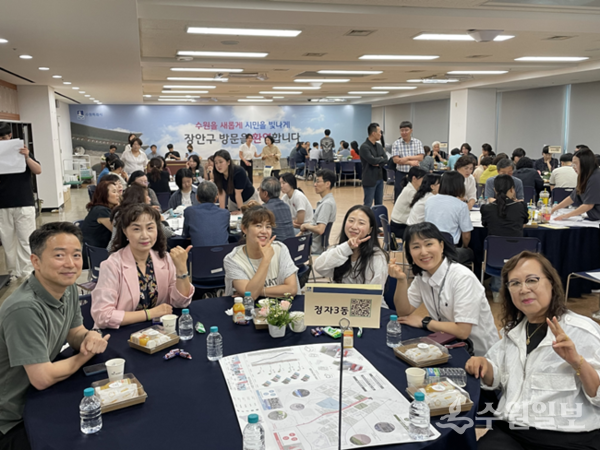
Jeongja 3-dong, which possesses Seoho Stream, one of Suwon's four major waterways, as a natural resource, set the goal 'Connecting Hearts, Connecting Neighborhoods.' The district will implement maintenance projects to separate bicycle and pedestrian paths along Seoho Stream, creating neighborhoods where environment and pedestrians grow closer. A characteristic feature is the idea to utilize vacant spaces within apartment complexes as village communities. By connecting programs linked with nearby universities to these spaces, the district is concentrating efforts on concretizing projects to add vitality to neighborhood life.
A city official stated, "Suwon City will spare no support so that mid-to-long-term development plans directly established by residents can flourish in neighborhoods," and added, "Based on strengthening Suwon citizens' resident autonomy capacity, we will focus on advancing resident-centered resident autonomy going forward."