Editorial The Dilemma of Hormuz Deployment…Pragmatic Diplomacy Seeking Common Ground Between Alliance and National Interest, Not Half-Hearted Justification
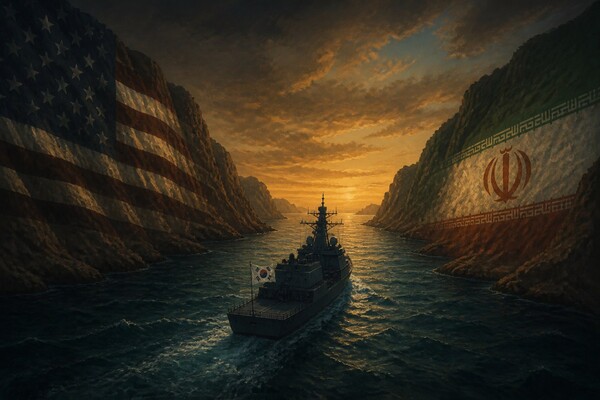
The Blue House and Yeouido are facing a harsh diplomatic trial once again. The deepening deliberation over "Hormuz deployment" between the Donald Trump administration's all-fronts military contribution pressure and Iran's blunt warning in Korean that "deployment will have serious consequences" vividly illustrates the structural dilemma that South Korean diplomacy faces.
The situation appears to be one of diplomatic dead-ends where it is neither possible to unconditionally reject U.S. demands nor to proceed with full-scale deployment while disregarding relations with Iran and the safety of servicemembers. What is needed now is not dichotomous alliance logic, but a "third pragmatic solution" that simultaneously secures the trust of the alliance and practical national interests.
Within government circles, compromise proposals such as deploying non-combat assets like maritime patrol aircraft or logistics support ships are being discussed, but this is dangerously complacent. In the crossfire of war zones, the modifier "non-combat" is meaningless. The moment Korean forces assist U.S. operations, Iran will regard it as clear intervention, which could result in the worst outcome: drawing complaints from the U.S. that it is "insufficient" and triggering security and economic retaliation from Iran.
Ultimately, the key is precise calculation that preserves the value of the Korea-U.S. alliance while minimizing national risk. To the U.S. side, the special security situation on the Korean Peninsula and the destabilizing effects of Middle Eastern energy supply disruptions on the Korean economy must be persuaded through objective data. Instead of direct military force deployment, concrete alternative proposals must be presented—expanded information sharing for maritime oil route stability, humanitarian support, or wisely utilizing the operational area of the Cheonghae Unit—that can secure recognition of alliance contribution while avoiding engagement risks.
Diplomacy is the art of finding the best intersection between principle and practicality. The longer time is prolonged by hiding behind superficial stopgap measures, the narrower the diplomatic position becomes. Above all, we must not commit the folly of using the deployment issue as a political tool to divide national unity and devastate public welfare in the face of rough diplomatic storms. The political community must unite with one voice to pool wisdom and strength, exercising precise calculation that preserves alliance trust while minimizing national risk. This is the time for South Korean diplomacy to demonstrate its true depth.