'Residential + Office' Gwangju Station District Youth Innovation Town Public Rental Housing 316 Units Created
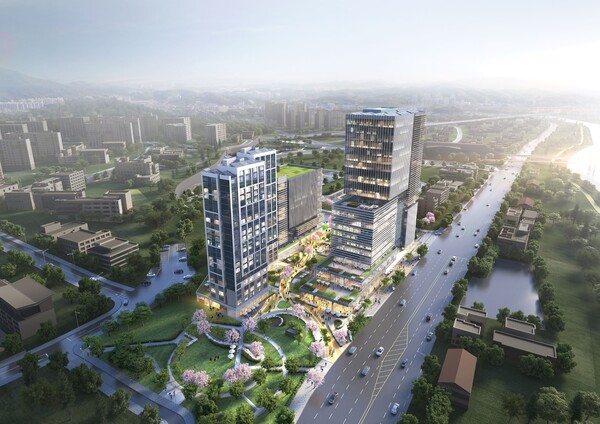
Gyeonggi Province and Gyeonggi Housing & Urban Development Corporation (GH) will complete the 'Gwangju Station District Youth Innovation Town Integrated Public Rental Housing' consisting of 316 units near Gwangju Station on the 31st.
The Gwangju Station District Youth Innovation Town is being developed in the Yongdong area of Gyeonggi Province near Gyeonggi Gwangju Station on the Gyeonggang Line, spanning 4 buildings with 3 basement and 24 above-ground floors. Two of these buildings will house 316 units of integrated public rental housing, while the remaining two buildings will be developed as a knowledge industry center called 'GH biz&Gyeonggi Gwangju Station'.
The Gwangju Station District Youth Innovation Town is characterized by placing residential and office facilities in one space. The project aims to reduce housing burden for young people and support settlement in the region by allowing youth and small and medium-sized enterprise workers to access both housing and jobs in close proximity.
The complex also provides community spaces including multipurpose rooms for residents to use.
Integrated public rental housing is public rental housing that can accommodate various groups including young people, newlyweds, and the elderly, with rent rates applied differentially based on residents' income levels. The maximum residency period is 10 years, and households with children can reside for up to 14 years.
For detailed information regarding public rental housing occupancy, please visit the Gyeonggi Housing & Urban Development Corporation website (gh.or.kr) or call the call center (1588-0466).
Kim Tae-su, Head of Housing Policy at Gyeonggi Province, said, "The Gwangju Station District Youth Innovation Town is a public housing model that links residential and job opportunities in one space," and added, "Going forward, we will continue to supply various public housing to reduce housing burden on residents and support housing stability for households without homes."