Government Considers Strait of Hormuz Deployment With Eye on North Korea-U.S. Talks
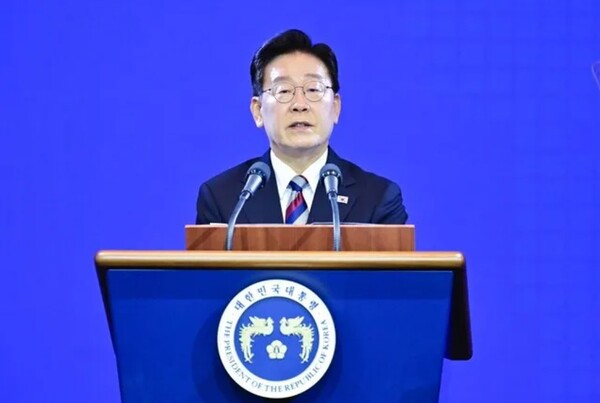
As the government considers deploying forces to the Strait of Hormuz, the political coalition of the progressive bloc faces a test.
The Blue House stated on the 4th that "substantive contributions to freedom of navigation in the Strait of Hormuz include military contributions," and indicated the government can consider deployment within a scope that does not undermine Korea's readiness posture for the Korean Peninsula. The Soyang-class frigate, P-8A maritime patrol aircraft, and mine countermeasure capabilities are among the options being discussed. Parliamentary approval is required for actual deployment.
The U.S.-Korea alliance underlies the government's consideration of deployment. The logic is that relying on the United States for the safety of the Strait of Hormuz while importing Middle Eastern crude oil and liquefied natural gas amounts to evading alliance responsibilities. Concerns are mounting that continued rejection of U.S. requests could have adverse effects on trade and Korean Peninsula issues.
Democratic Party leadership maintains a cautious stance, but voices of opposition to deployment are beginning to emerge within the party. The Democratic Party of Innovation and the Progressive Party argue that even supporting non-combat operations for U.S. military operations amounts to de facto participation in war, and are raising opposition voices, noting that soldiers and Korean vessels could be exposed to retaliatory attacks.
The People Power Party generally agrees with the necessity of deployment but criticized the government for responding belatedly. The party's position is that the government should transparently explain the rationale, practical benefits, and state of U.S.-Korea relations to parliament.
The government can consider limiting missions to escorting and rescuing Korean vessels, surveillance and reconnaissance, and mine detection. However, if reconnaissance information and military supplies are used in U.S. offensive operations, the line between non-combat support and actual participation becomes blurred. The surveillance gap for North Korea resulting from P-8A deployment must also be considered.
The possibility of resuming North Korea-U.S. talks is also a variable. There is a view that managing relations with the United States is necessary to secure Korea's voice in Korean Peninsula issues, but there is no clear evidence that deployment guarantees Korea's participation in negotiations.
If the government rejects deployment, pressure from the international community and the opposition party could intensify. Korea's voice in resuming North Korea-U.S. talks could become unclear. Conversely, if the government decides on deployment, it must accept internal Democratic Party conflict and defection from the progressive coalition. In the parliament going forward, full-scale debates are expected over deployment objectives, command structure, the scope of information sharing, and rules of engagement.
전시언 기자 yourside@news-s.kr