Rep. So Byeong-hun Proposes Amendment to 'National Basic Livelihood Security Act' to Address Blind Spots in Basic Living Allowances
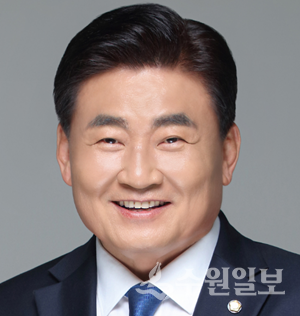
[News S = Reporter Eom In-yong] Rep. So Byeong-hun (Democratic Party・Gwangju-si A District, Gyeonggi Province), a member of the National Assembly's Committee on Health and Welfare, has introduced as the primary sponsor a "Partial Amendment Bill to the National Basic Livelihood Security Act" aimed at reflecting the actual economic circumstances of persons with support obligations when selecting beneficiaries of basic living allowances and establishing a closely-woven social safety net for households with severely disabled persons.
Currently, basic living allowances are denied to applicants when persons with support obligations have annual income exceeding 130 million won or property exceeding 1.2 billion won.
However, since only nominal figures of households are calculated, households that incur substantial loans for housing or children's tuition and face genuine economic hardship have continued to fall through welfare blind spots.
In particular, for severely disabled persons with limited work capacity and high fixed medical expenses, if the income or property of persons with support obligations slightly exceeds the ceiling and allowances are immediately suspended, they face an immediate threat to their livelihood.
Accordingly, the amendment introduced by Rep. So Byeong-hun includes △deducting essential debts for living stability and children's education, such as housing and tuition loans, when calculating the income and property of persons with support obligations, so that actual economic circumstances are transparently reflected.
Additionally, △a "special exception for severely disabled basic living allowance recipients" is newly established, allowing beneficiaries to maintain their eligibility even if persons with support obligations' income or property exceeds the standard, provided the beneficiary's own income-recognized amount falls below the standard.
However, the system ensures effectiveness and fairness by providing for graduated and differential reductions in basic living allowances according to the degree of excess of persons with support obligations and the work capacity of recipients.
Rep. So Byeong-hun stated, "The eased support obligation standard system, which aims to eliminate welfare blind spots, still fails to reflect actual loan burdens or household characteristics in the field, continuing to create unfortunate vulnerable populations," and emphasized, "Through this amendment, we will closely restructure the minimum livelihood safety net guaranteed by law and provide stronger protection for genuinely vulnerable populations."