Field Report 2. Policy Proposals for Vacant Houses in Suwon
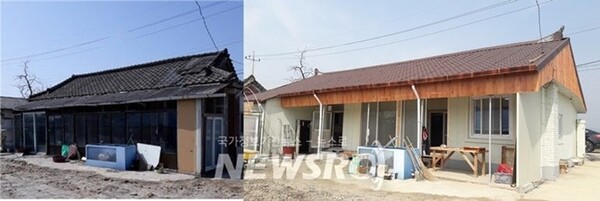
The problem of abandoned and vacant properties is occurring commonly across the nation in both rural and urban areas. Local governments nationwide are seeking various solutions to address these problematic vacant properties. Suwon Special City is no exception. Following an article published on February 24 titled "Derelict buildings standing within Suwon Special City," this second report examines what "alternatives" and utilization methods are available. (Editor's note)
[News S=Reporter Kim Chung-young] The severity of the vacant property problem has long been raised amid rapid urbanization, aging populations, and declining demographics. As neglected dilapidated vacant houses deteriorate over time, they damage neighborhood aesthetics, create safety hazards and enable crime, leading to deterioration in residents' quality of life, making urgent countermeasures necessary.
According to Statistics Korea data from the end of 2021, the number of vacant houses nationwide reached approximately 1.395 million units. This represents a 24.6% increase from 1.12 million units in 2016. By region, Gyeonggi Province accounts for 242,000 units, representing 17.3% of the total. Suwon is no exception, with 75 houses abandoned as vacant as of January 30, 2024. These include 55 single-family homes, 4 apartments, 1 row house, 2 multi-family units, and 13 multi-unit buildings.
Currently, when administrative vacant house grades are classified from 1 to 4, 13 units at grade 4 are in critical condition. In Maehyang-dong, 2 units are classified as grade 4 and 1 unit as grade 3. Three collapsed units in Maehyang-dong, Paldal-gu, adjacent to Samil High School fall into this category.
South Korea has long experienced a large-scale emergence of vacant houses in rural areas and has implemented measures to address them, but the effects have proven minimal. The reason is that these are private properties, making it impossible for administrative authorities to handle them arbitrarily. Even when demolition is pursued, government support amounts to only about 1 million won, providing little practical assistance. The remainder must be borne by the owners. Furthermore, since land tax rates are expensive after building demolition, owners are reluctant to proceed with demolition. Additionally, descendants living in cities often do not consent to demolition, hoping to return to their hometowns in their old age, which is another reason for abandonment.
So what approaches are other local governments taking with vacant and derelict properties? Many regions are managing and repurposing vacant properties through various methods. Some provide remodeled properties free of charge to returning farmers, while others convert derelict buildings into community centers. Some local governments use them as senior centers for residents over 80 years old, while others demolish abandoned properties and convert the land into community gardens or public parking lots.
In light of these examples, Suwon could consider implementing changes based on these cases. Among these, the most desirable approach would be to pursue small-scale redevelopment projects. This would enable the revitalization and activation of neighborhoods through slum area improvement.
Of course, Maehyang-dong's vacant property alley faces difficult circumstances. Located within the UNESCO World Heritage Site Suwon Hwaseong Fortress, it must comply with urban plans established by Suwon (district unit plans), making it impossible to construct tall buildings, which creates challenges for small-scale redevelopment.
Moreover, the current alleyways with vacant properties are less than 2 meters wide, making it impossible to demolish buildings or transport building materials, presenting operational challenges. However, even considering these factors, it appears feasible for Maehyang-dong's vacant property alley to acquire land from 3-4 households, remove building debris through the adjacent Samil High School campus, and create a community garden for residents to use.
In any case, addressing the vacant properties in Maehyang-dong is expected to yield positive effects of improving the neighborhood and enhancing the study atmosphere for Samil High School students on the adjacent site, enabling them to focus better on their studies.
Regarding this, Song Jong, chairman of the community organization 'Maehyang Samo' (Maehyang-dong, Paldal-gu), stated, "Aside from regulations, we hope for active administrative measures by referring to cases nationwide," adding, "To implement this, we first hope for an accurate assessment of the situation and the establishment of plans suited to local conditions."