Exclusive Urgent Need to Preserve Remaining Hanok Houses Within Hwaseong Fortress
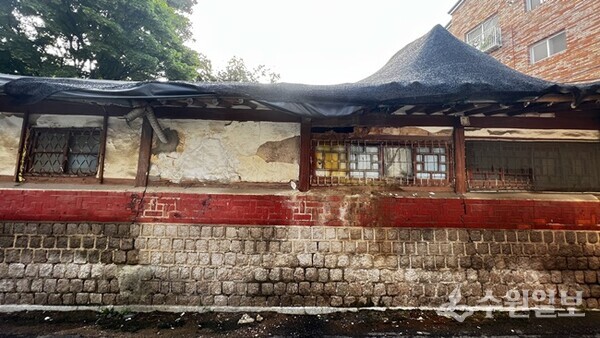
[News S=Reporter Lee Min-jeong] Hanok houses within the UNESCO World Heritage Suwon Hwaseong Fortress are rapidly disappearing, raising urgent calls for measures to preserve traditional architecture, historical heritage, and cultural landscape.
The Hwaseong Research Institute (Chairman Choi Ho-un) conducted a comprehensive survey of hanok houses within the fortress in August to promote preservation of existing structures.
The survey, conducted under the Monitoring Committee (Chairman Kim Kwan-su), a division of the research institute, revealed that a significant number of hanok houses listed in the "Status Survey of Hanok Houses in Suwon Hwaseong," issued by the Hwaseong Projects Office in 2009, have disappeared.
Only 13 Hanok Buildings in Good Condition Remain
The 2009 status survey documented 66 hanok houses within the fortress (21 in good condition), but as of August 2023, only 43 remain, with merely 13 in good condition. Over the past 14 years, 23 hanok houses—35 percent—have been lost due to demolition for public facilities, reconstruction as modern buildings, and construction of new hanok houses.
The Hwaseong Research Institute noted that while some existing hanok houses have been remodeled for continued use, others remain abandoned as vacant homes, such as the house at 19 Namchang-dong.
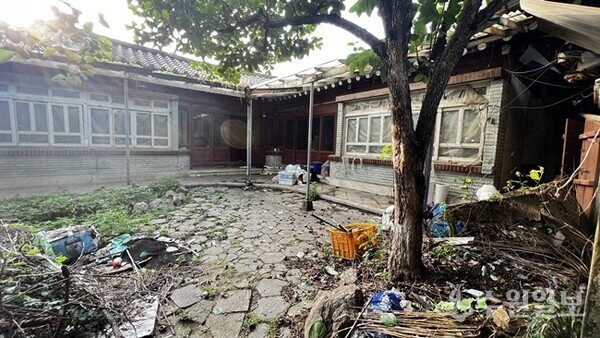
Kim Kwan-su, head of the Monitoring Committee, expressed disappointment, saying, "Suwon Hwaseong has been designated as a historic site under legislation restricting large-scale construction, allowing it to remain a historical city without apartments and large buildings. However, as buildings age and new construction occurs, modern buildings rather than hanok houses are increasingly being built."
Kim noted that while Suwon City had encouraged hanok construction through a "Hanok Support Ordinance" created in the 2010s, builders cannot afford the support level offered and therefore resort to constructing multi-unit residential buildings based on economic principles.
He emphasized the need to preserve existing hanok houses, which bear the marks of time and best showcase the cultural heritage landscape of Suwon Hwaseong.
Revision of "Hanok Support Ordinance" Necessary to Preserve Existing Hanok Houses
However, the Hwaseong Research Institute argues that as existing hanok houses continue to disappear due to deterioration and the pace of loss is accelerating, the "Hanok Support Ordinance" must be revised to provide greater support for preserving existing hanok structures.
Suwon City is implementing a project to construct hanok houses within Suwon Hwaseong to harmonize with the UNESCO World Heritage Site and promote hanok architecture. The project provides partial construction cost support to residents who build new hanok houses or renovate existing ones within the Suwon Hwaseong District Unit Plan zone.
The "Hanok Promotion Area" covers Shinpung-dong and Jangan-dong districts. Construction of new or renovated hanok houses in this area receives up to 150 million won (50 percent of construction costs based on total floor area), while hanok renovation receives up to 110 million won (50 percent of construction costs). New construction or renovation within the Suwon Hwaseong District Unit Plan zone can receive up to 80 million won, and renovation up to 60 million won.
"Remaining Hanok Houses Must Be Completely Preserved"
Choi Ho-un, chairman of the Hwaseong Research Institute, lamented, "Until the late 1990s, many traditional hanok houses created beautiful historical landscapes in harmony with the fortress walls. The hanok houses surrounding the fortress walls are living spaces for residents and valuable heritage resources that amplify the value of 'UNESCO World Heritage Suwon Hwaseong,' but since the 2000s, riding the wave of development boom, multi-unit and multi-family residential buildings have been constructed, causing many traditional hanok houses to disappear."
"In particular, Nam-su-dong and Nam-chang-dong, the two survey areas, have densely concentrated hanok houses creating excellent scenery and should receive special management going forward," he stressed. "While constructing new hanok houses is important, preserving disappearing old hanok houses takes priority. Now more than ever, we must completely preserve the remaining hanok houses."
Hwaseong Research Institute members urged that if hanok houses within the fortress embraced by UNESCO World Heritage Suwon Hwaseong are preserved, the value of Suwon Hwaseong will be further elevated and gain worldwide attention, calling on not only Suwon City but also Gyeonggi Province and the nation to take active steps.
*Data compilation and organization for this survey was conducted by Yeoyudang Architects (Co., Ltd.) operated by Monitoring Committee Chairman Kim Kwan-su. On-site surveys were conducted by the Hwaseong Research Institute's Monitoring Committee with 12 members including Jo In-sang, Kim Yong-heon, and Yun Ui-young (Jangan-dong and Buk-su-dong); Kim Woo-young and Kim Hae-ja (Maehyang-dong); Lee Nak-cheon and Kang Hee-su (Shinpung-dong); Jung Su-ja and Kim Yeon-hui (Namchang-dong, Paldalro 1·2-ga); and Kim Yong-gyo, Kim Nam-ok, and Han Jeong-gyu (Nam-su-dong). Data collection was handled by Chairman Choi Ho-un and former Chairman Kim Chung-young, while administrative and communication duties were managed by Executive Director Kim Mi-rae.